Skimle pour les consultants et investisseurs
Consacrez 80 % de votre temps aux enseignements, pas à l'organisation des données
Le conseil et l'investissement se gagnent ou se perdent sur la qualité de l'analyse qualitative — appels d'experts, entretiens avec les dirigeants, documents de data room, études de marché. Pour le quantitatif, les outils sont solides. Le qualitatif, lui, se bricole encore avec des documents Word et des tableurs Excel.
Skimle apporte aux équipes de conseil et aux investisseurs la rigueur qu'ils appliquent à la modélisation financière, mais pour le texte. Importez des transcriptions d'experts, des documents de data room ou des rapports d'étude. Skimle lit l'ensemble, fait apparaître les thèmes, signale les avis atypiques et relie chaque constat à une citation textuelle — de quoi défendre votre recommandation en comité de pilotage sans sourciller.
Une analyse à la hauteur des attentes des clients en profondeur comme en rapidité
Ce qui prenait des semaines de temps d'analyste prend des heures avec Skimle, sans sacrifier la rigueur qu'exigent les associés et les comités d'investissement. Skimle a été conçu par un ancien associé de McKinsey qui a mené plus de 1 000 entretiens clients et sait exactement où l'analyse qualitative craque sous la pression d'une mission.
- Chaque appel d'expert, document de data room et rapport de marché dans un seul espace de travail
- L'IA fait ressortir en quelques minutes les thèmes, les points de consensus, les avis atypiques et les signaux d'alerte
- Traçabilité complète — chaque constat renvoie à une citation textuelle précise
- Fonctionne dans plus de 100 langues, pour les projets internationaux et multipays
- Exports prêts pour le client vers Word, PowerPoint et Excel
- Les données restent dans l'UE — conformes au RGPD, avec des accords de traitement disponibles



DE 40 APPELS À UNE SYNTHÈSE DÉFENDABLE
Distillez les enseignements des appels d'experts, de parties prenantes et de clients
Vous avez mené 40 appels de réseau d'experts, 20 discussions clients et 10 séances de résolution internes, et la présentation de synthèse est attendue lundi. Comment extraire le signal de milliers de pages sans survoler en espérant n'avoir rien manqué d'essentiel ? Skimle lit chaque document, construit de bas en haut une structure des points de consensus, des contradictions et des avis atypiques, et relie chaque constat à la citation exacte qui l'appuie.
Comment ça marche
- 1. Importez tous les documents
Exportez les transcriptions depuis n'importe quelle plateforme de réseau d'experts et depuis toute autre source. Mélangez notes d'appels, transcriptions d'entretiens et contributions écrites dans un seul projet.
- 2. Orientez l'analyse autour de votre hypothèse
Décrivez ce que vous cherchez en langage courant. Skimle structure l'analyse autour de ce que vous cherchez à valider ou à réfuter, crée des sous-catégories et extrait de chaque document les faits qui les appuient.
- 3. Examinez les consensus et les avis atypiques
Skimle fait apparaître les thèmes sur l'ensemble des transcriptions, signale les points d'accord entre experts et met en avant les avis dissidents qui ont un poids analytique.
- 4. Vérifiez chaque constat
Cliquez sur n'importe quel thème pour voir les citations qui l'appuient et savoir quel expert a dit quoi. Les associés examinent le raisonnement directement — aucune boîte noire, aucun « c'est l'ordinateur qui le dit ».
- 5. Combinez avec l'ensemble de la base de preuves
Recoupez les avis d'experts avec les affirmations de la direction, les contrats et les données de marché réunis dans le même projet, pour que les contradictions apparaissent avant la restitution, et non après.


VOTRE CADRE D'HYPOTHÈSES, REMPLI DE PREUVES
Structurez les constats dans un arbre de questions organisé
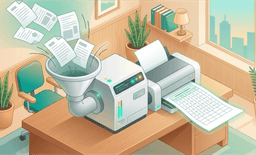
Un empilement de thèmes ne fait pas un récit. Les associés et les comités d'investissement raisonnent en arbres de questions : une hiérarchie claire de questions, chacune étayée par des preuves. Construire cette structure à la main sur une data room de 1 000 documents, c'est précisément là que la due diligence et le travail stratégique s'enlisent. Skimle vous laisse définir les branches principales de votre arbre de questions, puis lit chaque document pour remplir chaque branche de sous-catégories et des faits exacts qui les appuient ou les contredisent.
Comment ça marche
- 1. Importez l'ensemble du corpus
Glissez-déposez des PDF, des documents Word, des présentations et des exports de tableur — jusqu'à 1 000 documents par projet, sans tri ni prétraitement.
- 2. Définissez vos branches de premier niveau
Cadrez l'analyse autour de votre arbre de questions, de votre thèse d'investissement ou de votre grille de due diligence. Skimle organise les constats selon la logique de votre opération, et non selon des catégories génériques.
- 3. Laissez Skimle remplir l'arbre
Skimle construit des sous-catégories sous chaque branche, fait remonter les signaux d'alerte et recoupe les affirmations de la direction avec les entretiens et les contrats.
- 4. Remodelez librement la structure
Fusionnez, scindez et renommez les branches à mesure que votre réflexion avance. Chaque déplacement conserve son lien vers le document et le passage source, pour que les associés puissent creuser et contester n'importe quel nœud.
- 5. Interrogez l'ensemble du corpus
Posez des questions ciblées — « Qu'ont dit les directeurs financiers sur la pression tarifaire ? » ou « Où se concentrent les risques réglementaires ? » — et obtenez des réponses sourcées en quelques secondes.



DE L'ANALYSE À UN LIVRABLE PRÊT POUR LE CLIENT
Exportez des rapports et des présentations prêts pour le client
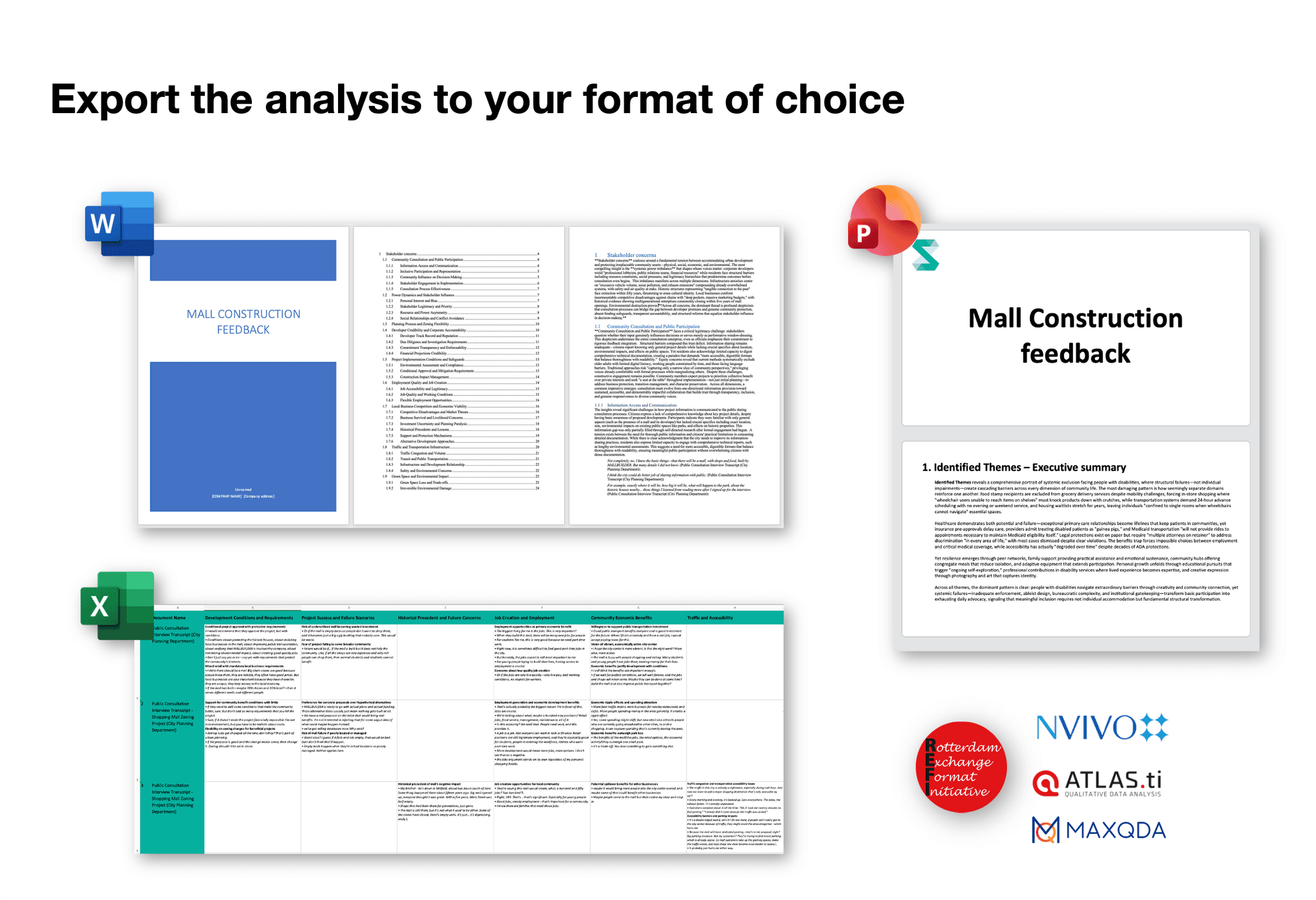
Le dernier kilomètre dévore les soirées des analystes : copier des citations dans des diapositives, mettre en forme des tableaux, réconcilier les rédactions de différents analystes entre chantiers et langues. Skimle transforme la structure analysée directement en export — Word, PowerPoint ou Excel — avec citations représentatives, références aux sources et ventilations marché par marché déjà en place, pour que la présentation parte d'un brouillon défendable plutôt que d'une page blanche.
Comment ça marche
- 1. Regroupez tous les chantiers
Gardez toutes les sources, langues et zones géographiques dans un seul projet, pour que l'export s'appuie sur l'ensemble de la base de preuves plutôt que sur un assemblage reconstitué.
- 2. Choisissez votre format de sortie
Exportez vers Word, PowerPoint ou Excel — un récit de synthèse, un résumé prêt à mettre en diapositives ou un tri croisé des thèmes par segment.
- 3. Conservez les citations et les références rattachées
Chaque constat s'accompagne de citations textuelles représentatives et d'une référence à son document source : l'annexe s'écrit d'elle-même et chaque affirmation est défendable.
- 4. Distinguez le global du local
Ventilez les résultats par marché ou par chantier, les tendances transversales aux marchés étant clairement distinguées des constats locaux isolés.
- 5. Livrez, puis défendez
Quand le comité de pilotage vous met au défi, remontez en quelques secondes de n'importe quelle ligne du rapport aux citations et documents sous-jacents.

FAQ
Questions fréquentes
- Les clients accepteront-ils une analyse assistée par IA ?
- Oui, si vous la présentez correctement. Positionnez-la comme une analyse humaine assistée par IA : l'IA organise les données, vous apportez l'interprétation stratégique. La traçabilité complète de Skimle vous permet de défendre chaque recommandation par des preuves, ce qui est plus solide qu'une synthèse manuelle où la logique de codage reste invisible.
- Pouvons-nous l'utiliser pour des données clients confidentielles ?
- Oui. Les données sont traitées de façon sécurisée, hébergées dans l'UE et ne servent jamais à entraîner des modèles d'IA. Skimle fournit des accords de sous-traitance aux clients institutionnels et prend en charge des déploiements en cloud mono-locataire pour les cabinets ayant des exigences de souveraineté plus strictes.
- Comment cela fonctionne-t-il avec les transcriptions de GLG, AlphaSights ou Tegus ?
- Exportez les transcriptions depuis n'importe quelle plateforme de réseau d'experts et importez-les directement. Skimle gère tous les formats de transcription et centralise l'analyse de tous les appels d'experts dans un seul projet, aux côtés des documents de data room et des études de marché, au lieu de la disperser dans des outils propres à chaque plateforme.
- Et si les associés doivent examiner l'analyse ?
- Skimle conserve une piste d'audit complète. Les associés voient exactement quelles sources appuient quelles conclusions et peuvent creuser directement dans n'importe quel nœud, ce qui rend la revue plus rapide que de demander aux analystes d'aller chercher les citations à la demande.
- Cela remplace-t-il les analystes juniors ?
- Non, cela les rend plus efficaces. Les juniors passent moins de temps à organiser des citations et à construire des tableaux de suivi, et plus de temps sur les entretiens clients, l'analyse et les recommandations. Ils peuvent prendre en charge des projets plus complexes plus tôt, avec une qualité plus régulière.
- Pouvons-nous mener plusieurs chantiers dans un même projet ?
- Oui. Étiquetez les documents par chantier, zone géographique ou type de source, puis filtrez thèmes et tendances selon ces étiquettes. Un projet d'entrée sur un marché avec quatre chantiers pays tient dans un seul projet, avec des vues par chantier comme des vues transversales aux marchés.
- Combien coûte Skimle par rapport au recrutement d'un appui à la recherche ?
- Un projet de due diligence qui demande 300 heures d'analyste manuellement prend environ 48 heures avec Skimle. Les formules individuelles démarrent à 20 euros par mois avec un abonnement annuel (25 euros par mois sans engagement annuel), et des formules organisation et entreprise existent. Contactez-nous pour discuter des options pour les cabinets de conseil et les fonds d'investissement.
Choisir votre approche d'analyse
Skimle face aux autres approches d'analyse en conseil
Lorsque vous comparez des méthodes d'analyse pour vos missions de conseil, tenez compte de l'économie du projet et du positionnement concurrentiel.
| Manuel Excel / Word | IA au coup par coup ChatGPT / Claude | Équipe externalisée | Skimle | |
|---|---|---|---|---|
| Rapidité | Lente (2–3 semaines) | Rapide (quelques heures) | Moyenne (1+ semaine) | Rapide (1–2 jours) |
| Qualité / rigueur | Bonne (si le temps le permet) | Faible — aucune traçabilité | Excellente | Excellente |
| Absorbe la complexité | S'effondre à grande échelle | Contexte limité | Oui (coûteux) | Oui |
| Intégration de sources multiples | Manuelle | Limitée | Manuelle | Intégrée |
| Livrables prêts pour le client | Mise en forme manuelle | Nécessite une lourde relecture | Oui | Automatisés |
| Défendre les recommandations | Documentation manuelle | Difficile | Bonne | Traçabilité complète |
| Coût (projet type) | Temps d'analyste (5 000 à 15 000 €) | ~100 € | 10 000 à 25 000 € | 100 à 500 € |
| Capitalise d'un projet à l'autre | Aucune mémoire conservée | Non | Coûts de personnel élevés | Oui |
| Verdict | À réserver aux très petits projets, où faire la synthèse soi-même prend moins de temps que la mise en place. | Utile pour un premier jet — mais les associés demanderont « comment le savez-vous ? » et vous n'aurez pas de bonne réponse. | Quand vous disposez d'une équipe étoffée, d'aucune contrainte de délai et d'une économie de projet qui supporte les heures d'analyste. | Plus de 15 entretiens d'experts, de vastes data rooms, des délais serrés, ou lorsque vous devez défendre vos recommandations avec une chaîne de preuves complète. |
À propos de Skimle
Conçu par des professionnels, pour des professionnels
Skimle est basé en Finlande et cofondé par un ancien associé de McKinsey et un professeur de stratégie de l'université Aalto — des personnes qui ont passé leur carrière à faire de l'analyse qualitative sous une vraie pression professionnelle. Nous avons construit Skimle parce que nous en avions besoin nous-mêmes.
Nous avons la confiance de ministères finlandais, de plus de 30 universités, de dizaines de cabinets de conseil et d'instituts d'études, ainsi que de grandes entreprises. Toutes les données sont hébergées dans l'UE et traitées conformément à notre politique RGPD stricte et à nos conditions d'utilisation.
Cabinets de conseil et fonds d'investissement intéressés par des formules équipe, des licences entreprise ou des solutions en marque blanche : contactez-nous. Nous discutons volontiers d'accords à l'échelle du cabinet et de déploiements sur mesure.