Episode 9: Skimle for academic researchers, including manual coding and codebook exports
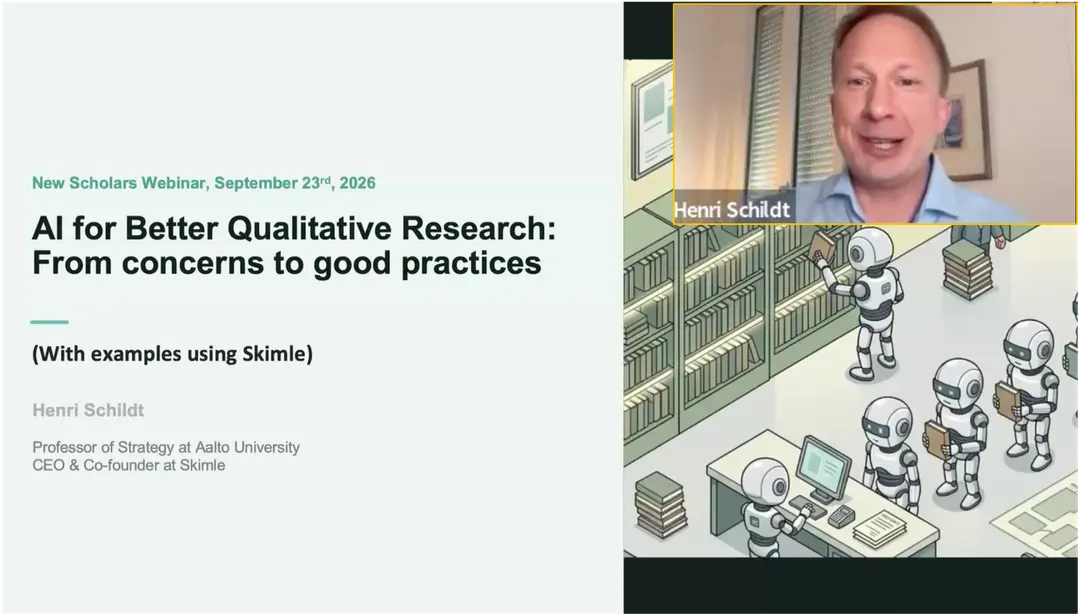
We return to the roots of Skimle and discuss how academic researchers are using the platform to dig deeper into their data, and how it is starting to find its way into qualitative methods courses for master's and PhD students. The conversation covers the shift in attitude toward AI in academia, from scepticism to cautious but genuine adoption, and why giving researchers control over the coding process matters as much as the AI doing the heavy lifting.
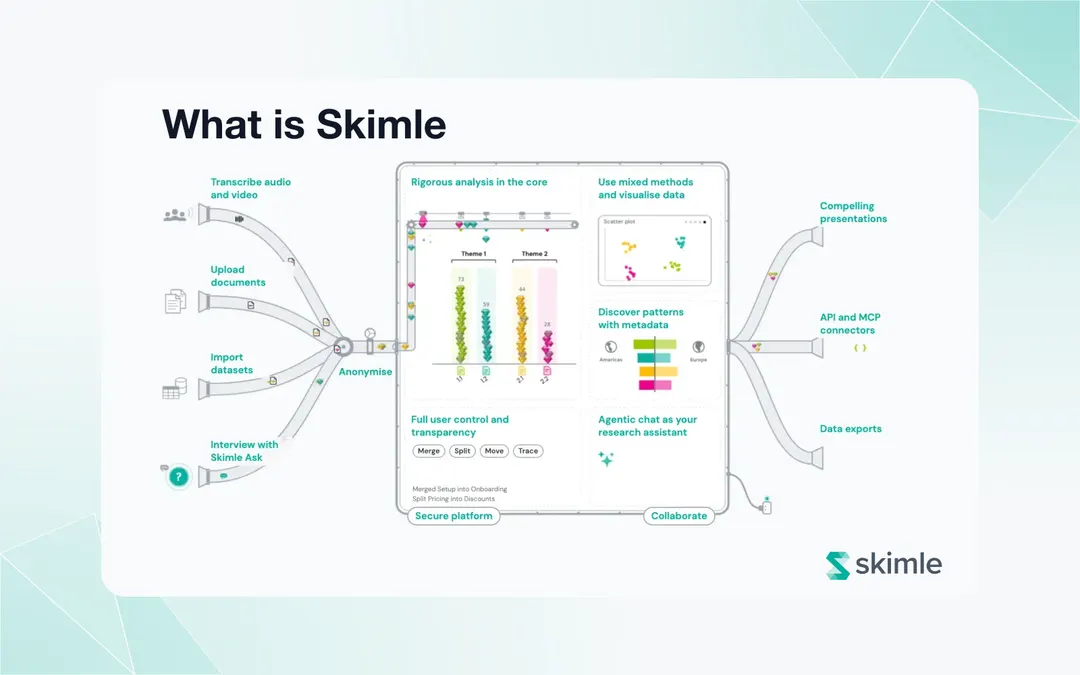
We walk through the new manual coding features: the ability to add, delete, relabel and regroup categories, move insights between themes, and generally shape the analysis rather than just receive it. We also cover the REFI-QDA (.qdpx) export, which lets you take your Skimle coding into NVivo, Atlas.ti or MaxQDA, and the codebook export to Word for collaborators who want to see the work without navigating a new tool. Anonymisation of transcripts is in the pipeline too, which will matter for research ethics compliance and wider data sharing.
If you want to go deeper, read our guide on manual coding and REFI-QDA export, or take a look at how to use AI in qualitative research for a broader academic context. The question of two-way transparency and why it matters for trusting AI output is also worth a read, as is the practical setup guide for audio recording and transcription if you are handling interview recordings.
Episode 10: Introducing Skimle Ask — AI interviewing tool for HR and other curious professionals
We try to make a mysterious, dramatic announcement of our latest feature and fail spectacularly within the first fifteen seconds. What follows, though, is a solid walkthrough of what Skimle Ask actually does. The short version: it sits between a traditional survey and a real interview, using AI to ask follow-up questions dynamically so you get qualitative depth without the scheduling overhead of one-to-one conversations.
You create an interview guide by describing your goal to the AI, which drafts a mix of open questions and multiple-choice items. The AI will also flag problems in your guide, such as leading questions or a fifteen-question survey labelled as a five-minute interview. Respondents get a chat interface, can answer by voice in any of 15 supported languages, and can skip questions without friction. The AI digs deeper when it spots something worth pursuing and stops when it has what it needs. The result feeds straight into Skimle's analysis engine, so you get structured themes, representative quotes and the full transparency chain back to individual responses. HR teams, product managers, and user researchers are the primary use cases, though we do also discuss summer party planning.
Read more about the feature in gathering rich data with AI interviews, or see how this applies to employee research specifically in HR surveys: moving from meaningless numbers to deep insights. If you are thinking about the broader case for always-on qualitative research, always-on customer research is a good companion read. And if you are weighing this against existing survey tools, our comparison of Typeform, SurveyMonkey, Google Forms and Skimle sets out where each fits.
You can try Skimle Ask at skimle.com/ask. Creating your first interview guide takes about 15 seconds.
About Skimle and Skimlecast
Read more about Skimlecast and watch Episode 1 here! You can watch all our episodes on our Spotify or YouTube channels. If you have any comments, feedback, topics you would want us to cover or other things you want to share, please connect with us through our form or via email through olli@skimle.com.
If you are interested in using Skimle, check out this page on how Skimle works. You can also try Skimle for free and experience how AI-assisted thematic analysis can help you handle larger datasets while maintaining academic rigour and generating deeper insights.
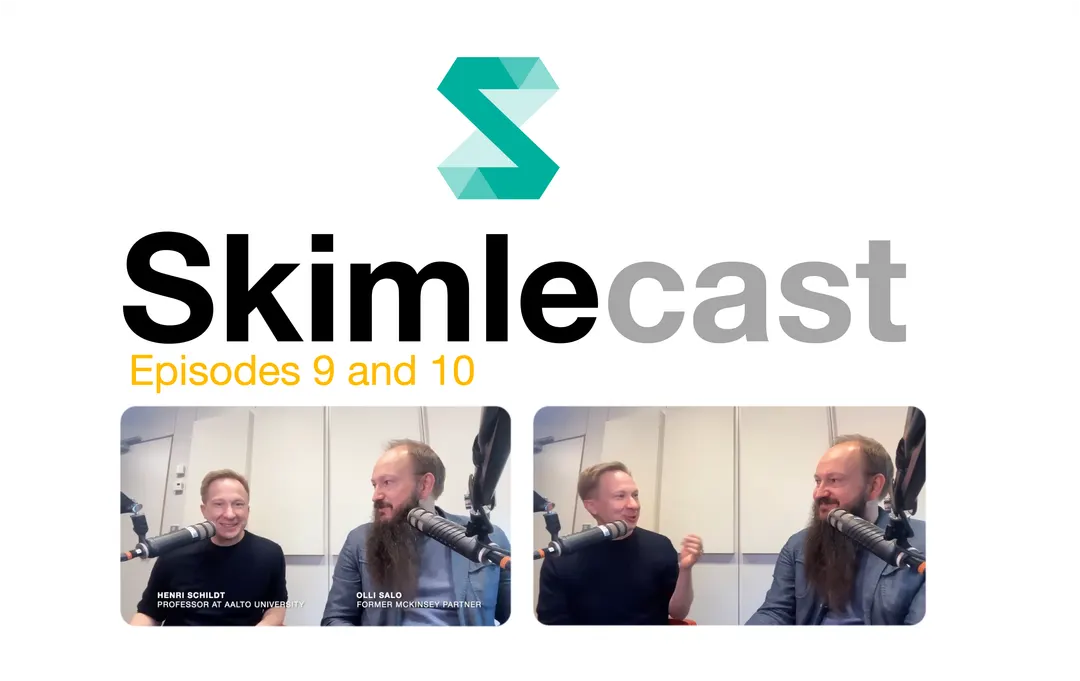
Meet the cast
Henri Schildt is a Professor of Strategy at Aalto University School of Business and co-founder of Skimle. He has published more than a dozen peer-reviewed articles using qualitative methods, including work in Academy of Management Journal, Organization Science, and Strategic Management Journal. His research focuses on organisational strategy, innovation, and qualitative methodology. Google Scholar profile
Olli Salo is a former Partner at McKinsey & Company where he spent 18 years helping clients understand the markets and themselves, develop winning strategies and improve their operating models. He has done over 1000 client interviews and published over 10 articles on McKinsey.com and beyond. LinkedIn profile