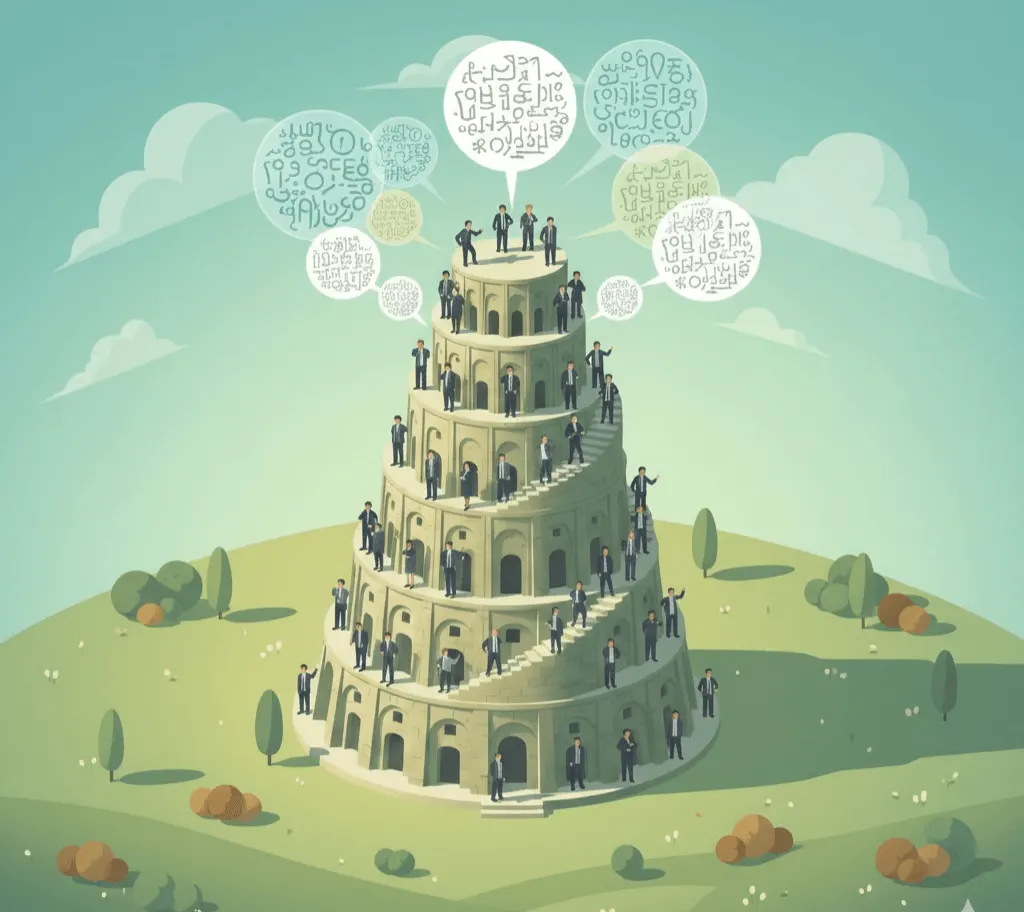
We've been demonstrating Skimle a lot to different potential customers, ranging from academic research institutions to consultants, with generally good feedback as knowledge workers active in analysing interviews and other text data find it intuitive to understand how Skimle performs qualitative analysis. Over time we've iterated our presentation material, found the best jokes and angles to bring.
This week we realised there is one question we get almost every time: Does Skimle support multiple languages?
This is of course an important feature for many (especially European and Asian) users, dealing for example with research informants speaking different official languages in the country (e.g., Finnish or Swedish, the two official languages in Finland, or English as that is the common language for business and expats) or EU officials receiving public consultation response statements for their consultations from different countries with many using their native language to comment in e.g., French or Italian. And many recording their interviews will have audio files they need to transcript in multiple languages, including Zoom or Teams call recordings from international customer discovery sessions.
The answer is yes, and for us this choice was so obvious from the start that we had forgotten to make noise about it... but for many users it's been a gamechanger as it allows people to work in a project with multiple languages (many of which they often don't understand) without needing to do translations all the time. With this blog post we want to explain how Skimle handles multiple languages and why we built it that way from the start.
Skimle's approach to multiple languages
One of the great features of Large Language Models is their native support for a huge range of languages and the ability to recognise and work with them without drama, just like multilingual humans can understand different languages, switch between them mid-sentence and understand concepts no matter which language they are expressed in.
For Skimle this practically means that you can input documents with a mix of languages from Arabic to Zulu and they are analysed for meaning regardless of the language. Insight extraction and cross-document category generation is agnostic to the language, so if someone talks about apples and someone else about Apfels, it doesn't really matter for the analysis. This matching is not based on dictionaries or translation word-by-word, it's built in to the way LLMs process concepts.
Now, when it comes to the output reports, most people want this to be in a consistent language they understand so they can list the apples and oranges in different categories for the reader. This is why Skimle asks you to define the project language at the start of the project - it is applied to the outputs.
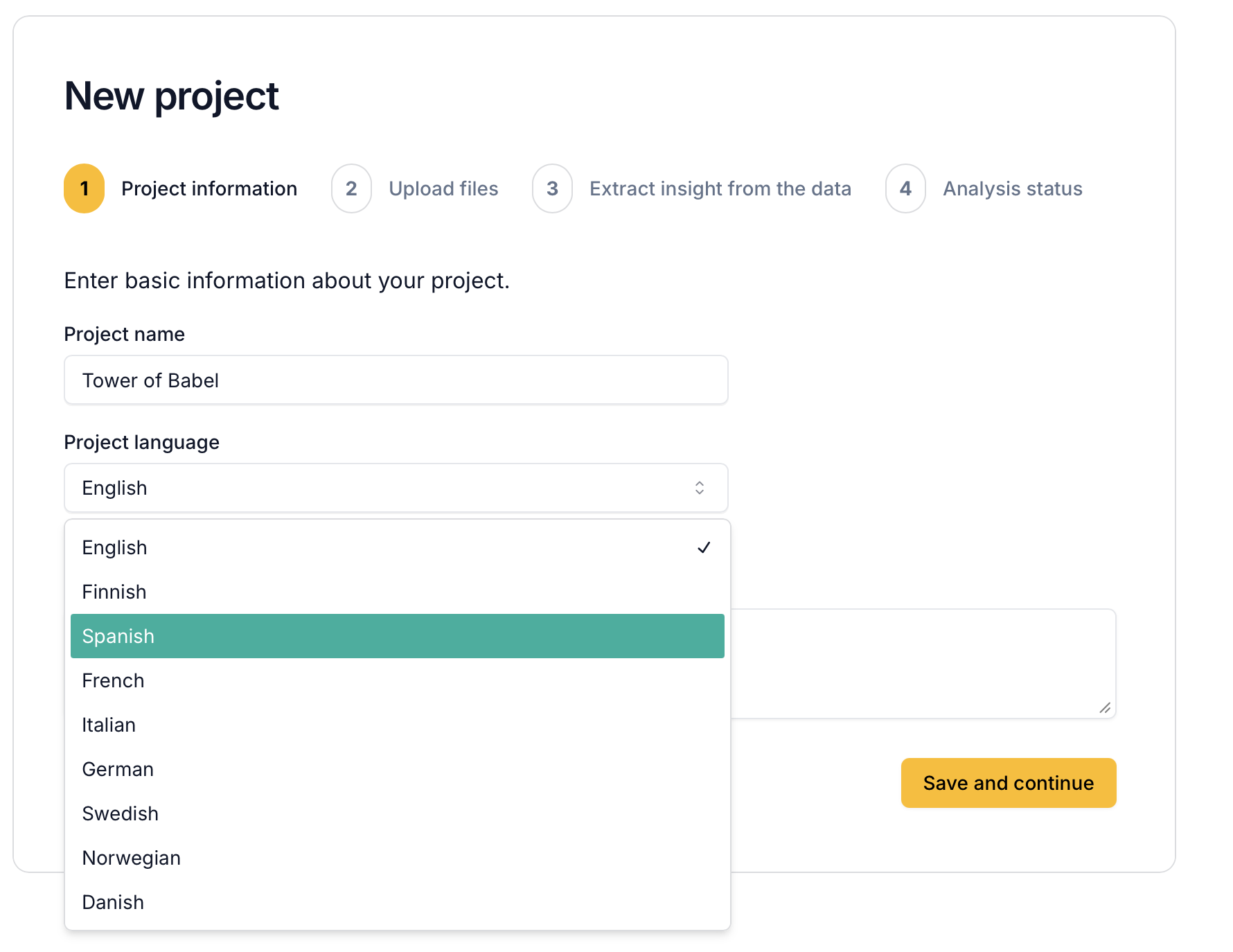
We currently support as output languages English, Finnish, Spanish, French, Italian, German, Swedish, Norwegian and Danish - and are happy to add languages based on customer requests just contact us!
Skimle summarises each individual quote in the selected output language, and also creates category names in that language so you can easily navigate the Skimle table and Categories view to understand what is said about each theme. If you want to get to the source, you click on the insight and enter Document view. In document view we never edit the originals, nor translate them. So you will be able to read the exact original quote in the original language. Similarly for exports to Word, PowerPoint and Excel, we show the original quotes in original language to avoid any risk of misattribution or misunderstanding. You can then decide to translate the quotes you want to show with the help of e.g., official translators. This full fidelity to source material is important for many of our professional users.
The user interface is still mainly in English but beneath the hood we've kept the thing modular so once we run out of other great feature ideas to implement we will get around to translating also the menus, buttons and help texts to multiple languages!
We hope you enjoy the flexibility Skimle provides in terms of working across languages!
Ready to try with multiple languages in one analysis project? Try Skimle for free and experience AI-assisted multi-lingual analysis with full transparency from every insight back to source quotes in original language.
About the authors
Henri Schildt is a Professor of Strategy at Aalto University School of Business and co-founder of Skimle. He has published over a dozen peer-reviewed articles using qualitative methods, including work in Academy of Management Journal, Organisation Science, and Strategic Management Journal. His research focuses on organisational strategy, innovation, and qualitative methodology. Google Scholar profile
Olli Salo is a co-founder at Skimle and former Partner at McKinsey & Company where he spent 18 years helping clients understand the markets and themselves, develop winning strategies and improve their operating models. He has done over 1000 client interviews in numerous different languages and published over 10 articles on McKinsey.com and beyond. LinkedIn profile