Akademisk grundighed i AI'ens tempo
Skimle blev bygget af forskere til forskere. Medstifter, professor Henri Schildt har årtiers erfaring med kvalitativ forskning og artikler i førende managementtidsskrifter, blandt andet Academy of Management Journal og Organization Science. Han blev træt af NVivos og MAXQDA's langsomme og klodsede arbejdsgange og var bekymret over den måde, ChatGPT bruges til analyse, der mangler gennemsigtighed og dækning. Så han byggede Skimle som den platform, der genskaber en grundig og gennemsigtig kvalitativ metode, blot med AI i kernen.
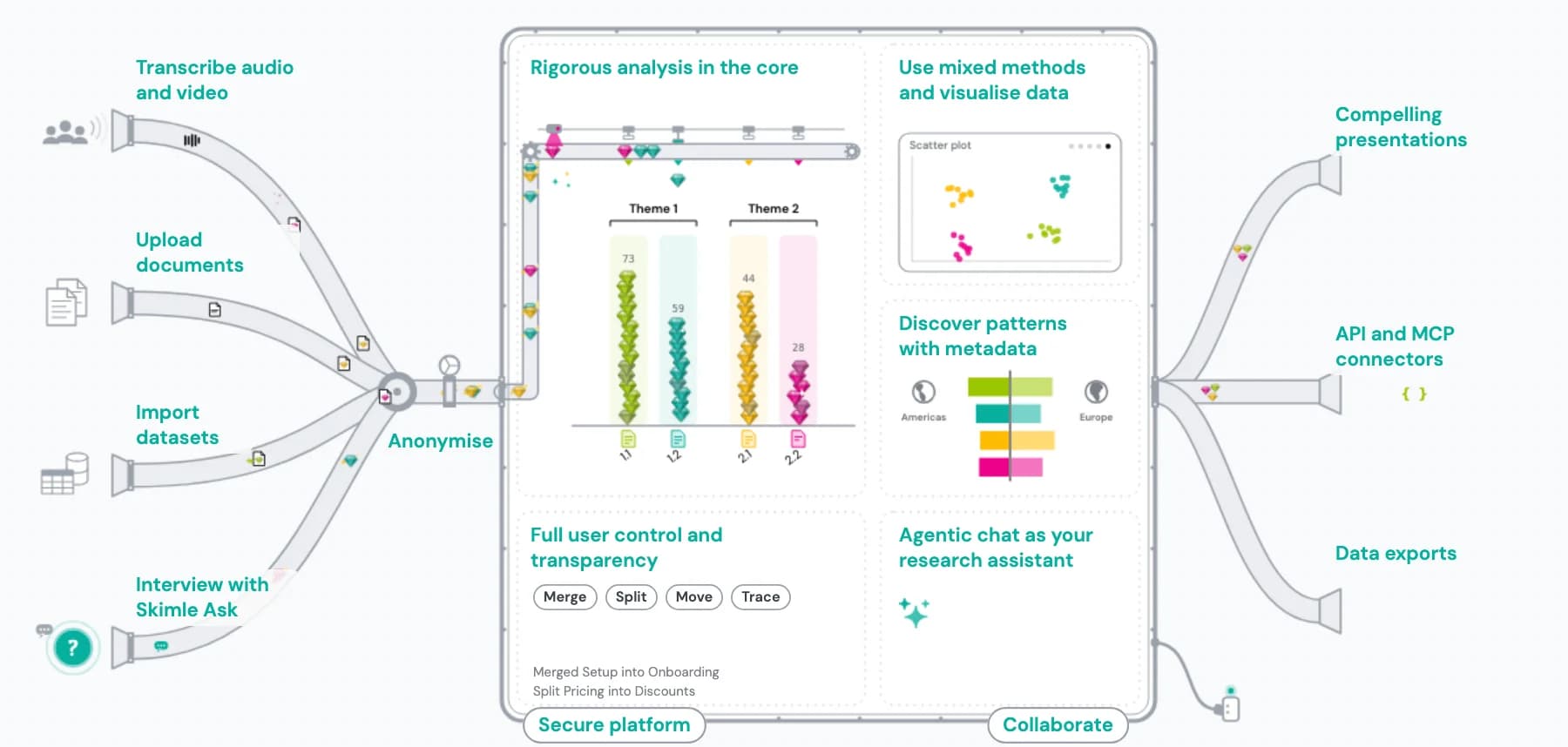
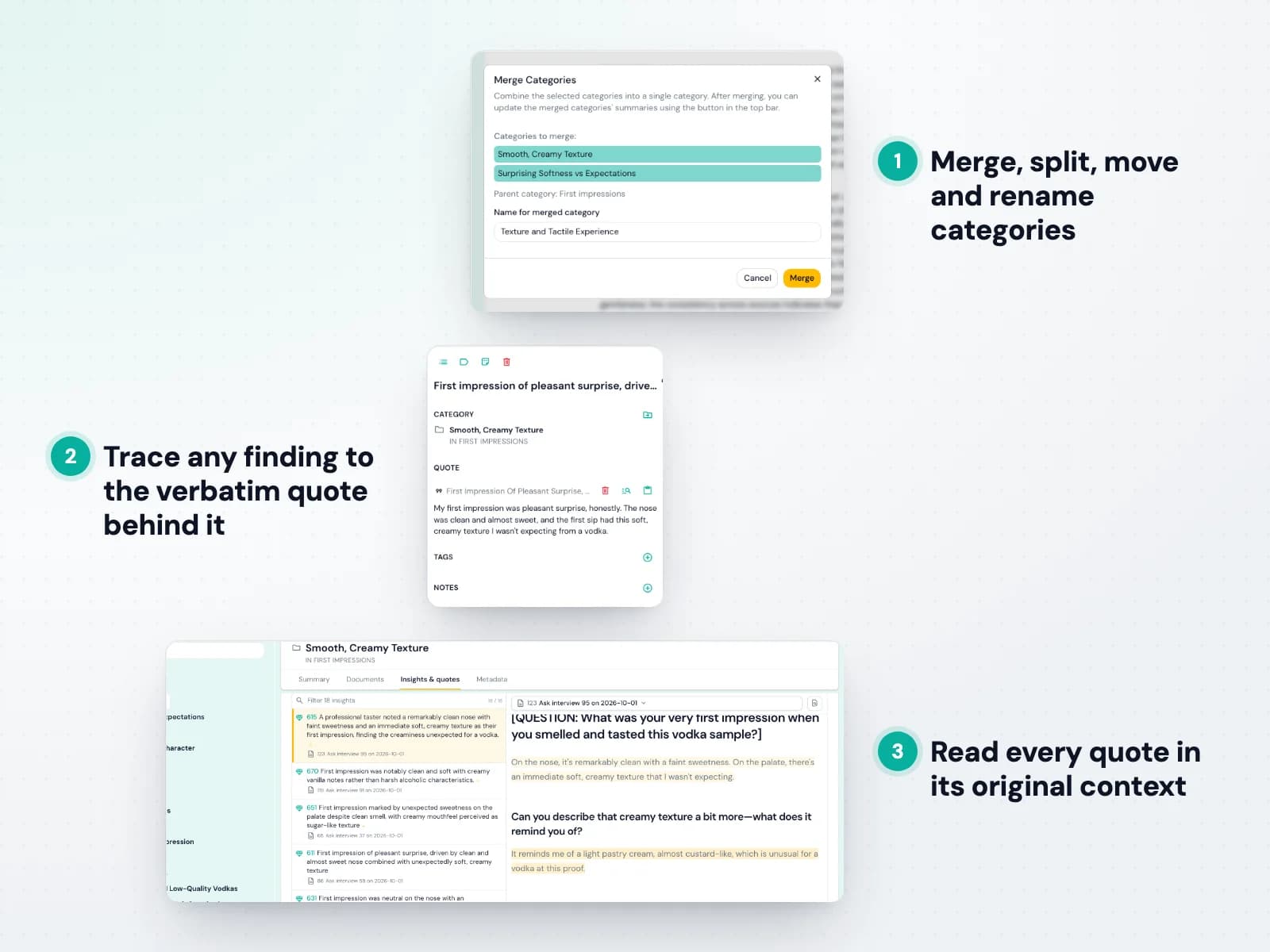
Den indledende kodning af interviews kan tage uger i hånden. Skimle klarer den uden at gå på kompromis med den metodiske grundighed og fanger ofte citater, et menneske ville overse. Hvert tema kobles til et verificeret ordret citat. Den fulde revisionsspor holder over for fagfællebedømmere.
Undervisningsmateriale →Grundig analyse, der lader dig fokusere på dit teoretiske bidrag
Skimles tilgang er inspireret af grounded theory (Glaser & Strauss; Strauss & Corbin) og Gioias metode. Den leverer den systematiske og gennemsigtige analyse, fagfællebedømmelse kræver, uden de ugers mekaniske kodning, der er bedre brugt på teori. Den fungerer på over 100 sprog og håndterer op til 1.000 dokumenter pr. projekt.
- Automatiseret indledende kodning — hvert citat knyttet til sin kategori
- Fuldt tovejs revisionsspor til fagfællebedømmelse og metodegennemsigtighed
- En kodebog, du styrer — flet, opdel, omdøb og omorganiser kategorier frit
- Virker på over 100 sprog uden oversættelse
- Håndterer interviews, lyd og video, bøger, dokumenter og arkivmateriale
- Skimle Academic — en rabatteret plan — er tilgængelig

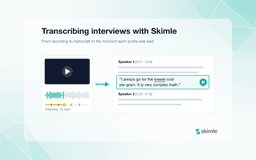
Transskribér og anonymisér interviews
At gøre feltoptagelser til brugbart materiale er langsomt og dyrt via en ekstern tjeneste, og de transskriptioner, der kommer ud af det, bærer navne, tilhørsforhold og steder, som skaber GDPR- og etikforpligtelser, før du kan dele, arkivere eller citere dem. Skimle transskriberer lyd og video i sit sikre, EU-baserede miljø og anonymiserer derefter med pseudonymisering på forskningsniveau, så du har en regelefterlevende og kodningsklar transskription samme dag, uden at materialet nogensinde forlader GDPR-sikret infrastruktur.
Sådan fungerer det
- 1. Upload lyd, video eller tekst
Upload MP3-, M4A-, WAV-, MP4-, MOV-, PDF- eller Word-filer direkte. Ingen ekstern transskriptionstjeneste, og over 100 sprog håndteres direkte.
- 2. Transskribér med talermarkering
Skimle transskriberer optagelsen, registrerer talerskift og håndterer accenter og svingende lydkvalitet. Gennemgå og ret resultatet, før analysen begynder.
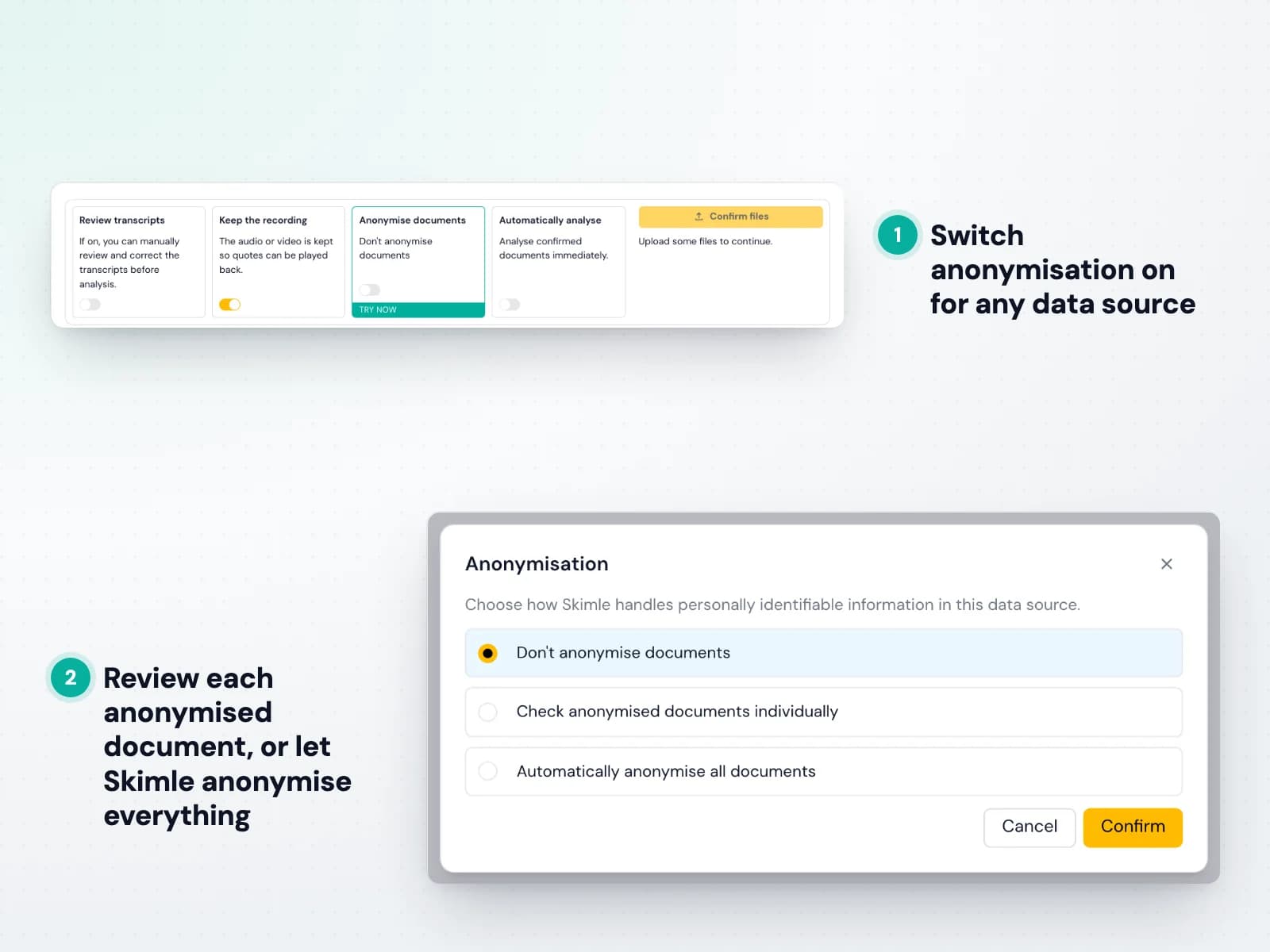
- 3. Find identifikatorer automatisk
Skimle Anonymise markerer identifikatorer i seks kategorier — navne, titler og roller, steder, organisationer, datoer og øvrigt — i alle dokumenter, med konsistens på tværs af filer, så den samme person beholder det samme pseudonym.
- 4. Vælg niveau for anonymisering
Vælg let pseudonymisering, stærk pseudonymisering eller anonymisering på HIPAA-niveau, hvor nøglen destrueres. Justér hver kategori for sig, og tilføj egne regler i almindeligt sprog.
- 5. Eksportér med revisionsdokumentation
Eksportér en revisionsrapport som PDF og en oversættelsestabel i Excel til din etiske komité, og før derefter den rene transskription direkte ind i Skimles arbejdsgang. Kildelyden slettes sikkert bagefter.


Lav en AI-understøttet kvalitativ analyse af interviews
Forskning baseret på mere end 40 interviews bør give et rigt teoretisk bidrag (for eksempel til din ph.d.), men den manuelle kodning — markere, ordne, kode om, bygge oversigter — bruger det meste af den tilgængelige tid og overser måske alligevel vigtige mønstre. Skimle læser hvert interview systematisk og giver dig et struktureret temahierarki med ordrette citater vedhæftet, så du kan bruge din tid på den teoretiske fortolkning, som kun du kan levere.
Sådan fungerer det
- 1. Upload dine transskriptioner
Træk interviewtransskriptioner ind som PDF, Word eller almindelig tekst. Skimle tager imod dokumenter i alle formater og håndterer over 100 sprog direkte.
- 2. Beskriv dit forskningsspørgsmål
Angiv dit analytiske fokus, bredt eller specifikt. Skimle bygger den indledende kodning op om det, du forsøger at forstå teoretisk.
- 3. Gennemgå den første kodestruktur
Skimle laver et temahierarki, hvor hvert tema er koblet til ordrette citater fra kildetransskriptionerne. Intet bliver opfundet. Hver kode kan spores til tekst.
- 4. Tilpas til dit teoretiske rammeværk
Slå sammen, opdel, omdøb og omorganisér kategorier, så de matcher din voksende teoretiske model. Tovejsgennemsigtighed lader dig når som helst kontrollere, hvilke citater der understøtter hvilke koder.
- 5. Eksportér til dit metodebilag
Eksportér din kodebog og understøttende citater som tekst eller i det åbne format REFI-QDA (.qdpx), som understøttes af ældre CAQDAS-programmer som NVivo, Atlas.TI og MAXQDA.



Lav en mixed methods-analyse af din stikprøve
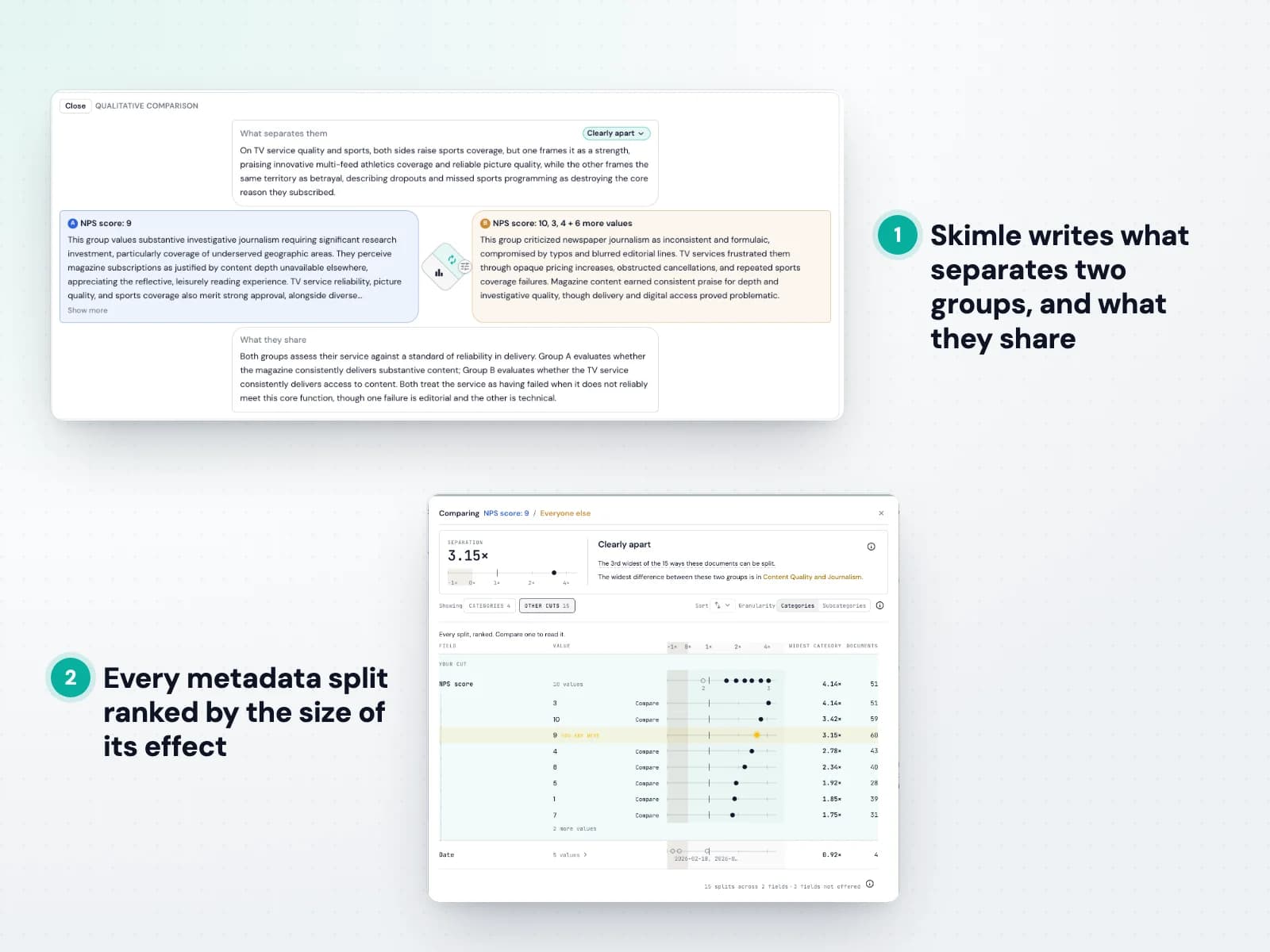
Kvalitative fund vejer tungere, når du kan vise, hvordan de varierer inden for stikprøven: efter kohorte, rolle, køn, sted eller betingelse. At krydstabulere temaer mod deltagernes egenskaber i hånden er besværligt og let at gøre forkert. Skimle knytter metadata til hvert dokument og lader dig segmentere den samme temastruktur på en hvilken som helst variabel, så du kan bevæge dig mellem rige ordrette citater og kvantificerede mønstre uden at efterlade nogen af metoderne.
Sådan fungerer det
- 1. Knyt metadata til dokumenterne
Mærk hver transskription med de variabler, der betyder noget for dit design — kohorte, rolle, køn, sted, bølge eller forsøgsbetingelse — manuelt eller fra en CSV-kolonne.
- 2. Kør den kvalitative analyse
Skimle bygger ét temahierarki på tværs af hele materialet, så hver deltager kodes mod den samme struktur.
- 3. Segmentér temaer efter variabel
Se, hvordan hvert tema varierer på tværs af grupper, og opdag, hvornår et mønster er alment, og hvornår det hører til én enkelt kohorte.
- 4. Gør udbredelsen målbar
Aflæs temafrekvenser og fordelinger for at rapportere, hvor udbredt en kode er pr. segment, hvor hvert tal kan spores tilbage til de citater, der frembragte det.
- 5. Eksportér tabeller og citater
Eksportér krydstabuleringer og understøttende citater til Excel eller Word til artiklens mixed methods-afsnit.


Ofte stillede spørgsmål
- Kan jeg citere Skimle i min forskning?
- Ja. Beskriv det som »AI-assisteret software til kvalitativ kodning« i dit metodeafsnit, ligesom du ville henvise til NVivo eller MAXQDA. Vi har en metodeartikel i fagfællebedømmelse, som vil give en formel reference, og indtil da foreslår vi gerne en formulering på forespørgsel.
- Vil fagfællebedømmere acceptere AI-assisteret analyse?
- I stigende grad ja, med ordentlig dokumentation. Skimles revisionsspor giver bedømmerne det, de forventer: en dokumenteret, systematisk kodningsproces, hvor hvert tema kan spores til bestemte citater, så metodeafsnittet i vid udstrækning skriver sig selv.
- Hvordan er Skimle sammenlignet med NVivo eller MAXQDA?
- NVivo og MAXQDA passer til forskere med uger til analysen og en institutionslicens. Skimle automatiserer den mekaniske kodningsfase — fra uger til timer — og bevarer den samme systematiske og gennemsigtige metode, og indlæringen tager minutter. Mange forskere bruger begge dele: Skimle til den første kodningsrunde og NVivo til mixed methods-integration.
- Virker Skimle til grounded theory?
- Ja. Skimle understøtter induktiv kodning, hvor temaerne opstår ud af data i stedet for at blive fastlagt på forhånd. Start med et bredt fokus og lad kategoristrukturen udvikle sig trinvist, hvilket ligger tæt op ad åben kodning i grounded theory.
- Kan jeg lave mixed methods-analyse?
- Ja. Knyt metadatavariabler til hvert dokument — kohorte, rolle, køn, sted, betingelse — og segmentér temastrukturen efter en hvilken som helst af dem. Du får temafrekvenser og fordelinger pr. gruppe, hver enkelt sporbar til ordrette citater og klar til mixed methods-afsnittet i din artikel.
- Er mine forskningsdata sikre?
- Dine transskriptioner behandles på EU-baseret infrastruktur og bruges aldrig til at træne AI-modeller. Vi leverer databehandleraftaler til institutionelle etiske krav og kan imødekomme de fleste it-sikkerhedsbehov. Kontakt os med konkrete krav.
- Kan jeg få akademisk rabat?
- Ja. Akademikere med en gyldig institutionsmail og en tilknytningsside kan købe den rabatterede Skimle Academic-pakke. Kontakt os om institutionslicensering, hvis du har brug for teamadgang til en forskergruppe eller et laboratorium.
Bygget af fagfolk til fagfolk
Skimle har over 1.500 glade brugere på 50+ universiteter, offentlige institutioner, agenturer og virksomheder. Al data opbevares inden for EU og behandles efter vores strenge GDPR-politik og vores brugervilkår.
Vil du vide mere? Udforsk vores blog Signal & Noise, vores ofte stillede spørgsmål og anvendelsesområder efter branche. Vi viser også gerne produktet frem eller gennemgår, hvordan Skimle passer til dine behov. Læs mere om virksomheden bag Skimle