Signal & Noise
Skimle's resource centre dedicated to high quality analysis using modern methods
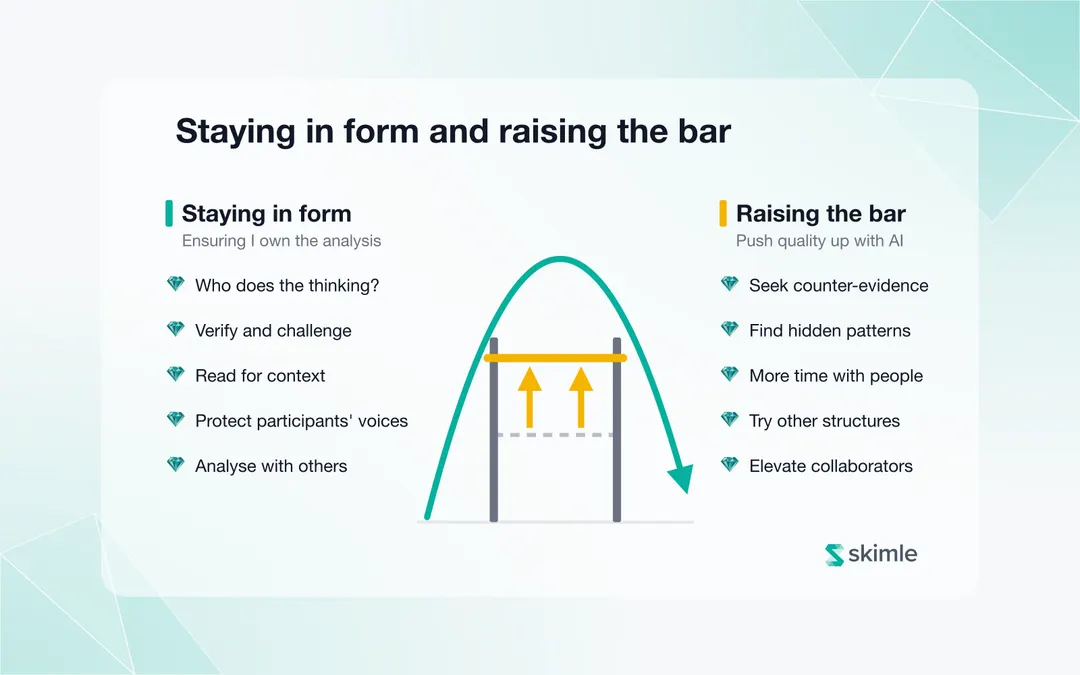
Reflexivity on the role of AI in research: am I staying in form AND raising the bar?
Reflecting on AI is a good practice, whether you use it or not. I argue to consider both the risks of losing ownership, but equally the opportunities of improving quality.

Using AI for ethnographic research: a practical guide for responsible AI-assisted ethnography
How AI fits across an ethnographic study: literature review, transcribing field notes and interviews, finding themes, and testing alternative framings.

Reflexive thematic analysis: the 6 phases with a worked example
A step-by-step walkthrough of Braun and Clarke's 6 phases of reflexive thematic analysis, with a real dataset example and guidance for PhD students.

Discourse analysis in qualitative research: approaches, steps, and when to use it
Discourse analysis examines how language constructs meaning and power. This guide covers the main approaches, practical steps, and when to choose it over thematic analysis.

Data saturation in qualitative research: what it means and how to reach it
Data saturation is misunderstood in qualitative research. Learn what it actually means, code vs meaning saturation, and practical guidance for your study.

Framework analysis in qualitative research: a 5-step guide with examples
Framework analysis is the standard qualitative method for applied and policy research. This guide covers all 5 steps with worked examples and when to use it.

Exploratory research: definition, 4 methods, and when to use it
Exploratory research investigates topics where little is known. Learn the definition, 4 main methods, examples across industries, and when to use it vs confirmatory.

Purposive sampling in qualitative research: 6 types with examples
Purposive sampling selects participants deliberately to answer your research question. Learn 6 types, when to use each, and how to justify your sample.

Data collection methods in qualitative research: 8 approaches compared
Qualitative data collection includes interviews, focus groups, observation, and more. This guide compares 8 methods on depth, feasibility, and analysis needs.

Variables in research: 5 types explained with qualitative and quantitative examples
Variables in research are characteristics that can change across participants or conditions. Learn the 5 main types with examples from both qual and quant research.

How to code interview transcripts
How to code interview transcripts step by step: build a codebook, apply codes consistently, cluster into themes, check reliability, and scale with AI.
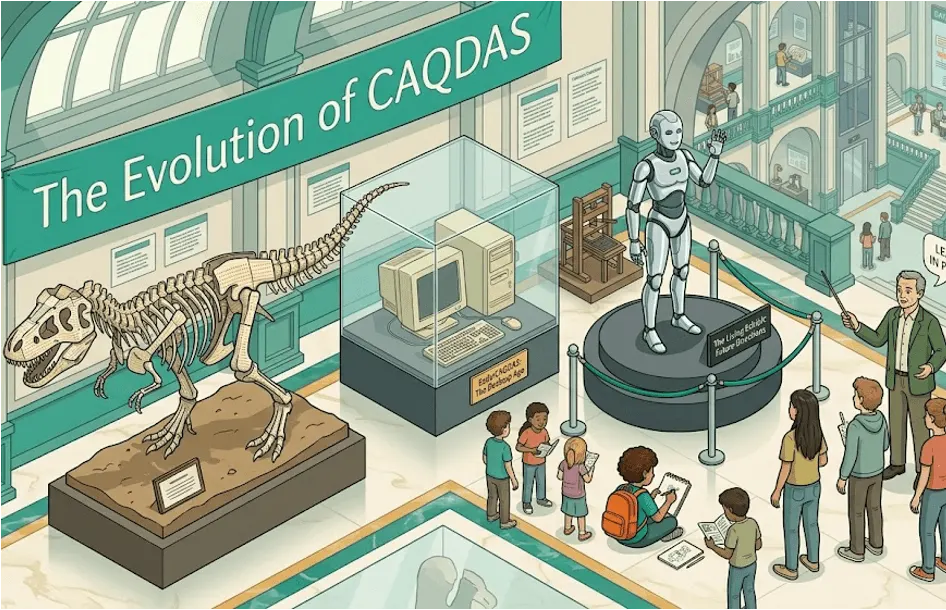
What is CAQDAS? Qualitative data analysis software explained
CAQDAS is qualitative data analysis software for coding and managing research data. Learn its history, the 3 generations, and how AI is changing QDA software.

How to code qualitative interviews with AI
How to code qualitative interviews with AI: why chatbots summarise instead of coding, how systematic AI coding works, and how to export to NVivo via REFI-QDA.

Strengths and weaknesses of qualitative research: a dispassionate analysis
A 2026 look at the strengths and weaknesses of qualitative research — depth vs generalisability, cost, bias, and how AI is changing the cost-benefit calculation.

Thematic analysis in qualitative research: overview and examples
By the end of this guide, you'll know thematic analysis's 6 phases, how to code qualitative data, and the 3 most common mistakes that lead reviewers to reject findings. With worked examples.

AI in qualitative research in 2026: what it does well, what it doesn't, and how to use it responsibly
AI is changing how qualitative research gets done. Learn what AI tools can and cannot do, the ethical questions to navigate, and how to use AI without sacrificing rigour.

Quantitative vs qualitative research: differences, when to use each, and what's changing 2026
Quantitative research measures; qualitative research interprets. This guide covers the key differences, a decision framework for choosing between them, and how AI is blurring the boundary.

Reflexivity in qualitative research: what it means and how to practise it
Reflexivity in qualitative research means acknowledging how the researcher's position shapes what they see and interpret. This guide covers types, practical approaches, and how to write a reflexivity ...

What is qualitative data? Types, examples and how to analyse it
Qualitative data is non-numerical information about meaning, experience, and context. Learn the main types, how it differs from quantitative data, how it's collected, and how to analyse it.

What is a focus interview and how do you conduct one?
A focus interview is a structured qualitative interview centred on a specific experience or stimulus. This guide covers the method, when to use it, how to design and conduct one, and how to analyse th...

Mixed methods research: 4 designs, examples and when to use it
Mixed methods research combines qualitative and quantitative data to answer questions neither approach can handle alone. Learn the 4 main designs, real examples, and when mixed methods is the right ch...

Qualitative research methods: 5 main approaches and when to use each
Interviews, focus groups, ethnography, case studies, and document analysis are the five core qualitative research methods. Learn how each works and which fits your research question.

What is qualitative research? Methods, types and when to use it
Qualitative research explores meaning, experience, and context through text, interviews, and observation. Learn the main methods, when to use each, and how it differs from quantitative research.

Bias in AI-assisted qualitative analysis: what it looks like, and how to catch it
AI bias in qualitative analysis means a model's errors correlate with who said what. What the research on GPT, Llama and Claude found, and how to catch it.