Signal & Noise
Skimle's resource centre dedicated to high quality analysis using modern methods
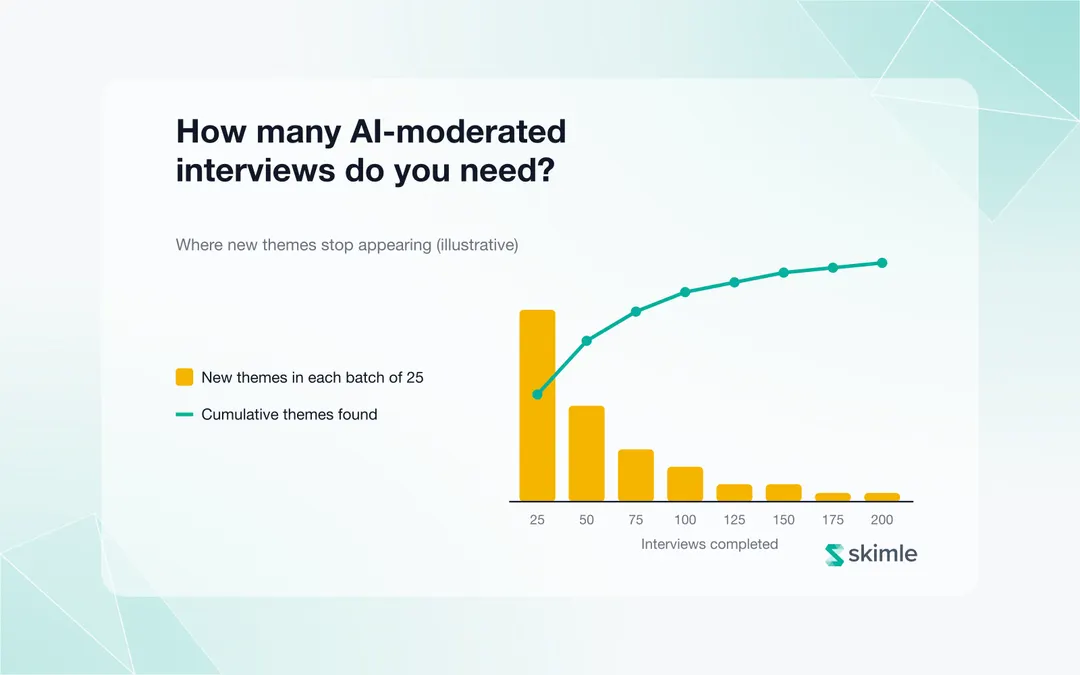
How many AI-moderated interviews do you need? Sample size when qual reaches n=200
How many AI-moderated interviews are enough? Saturation evidence, 4 rules for sizing AI interview studies, and when 200 interviews beat 20 for market research.
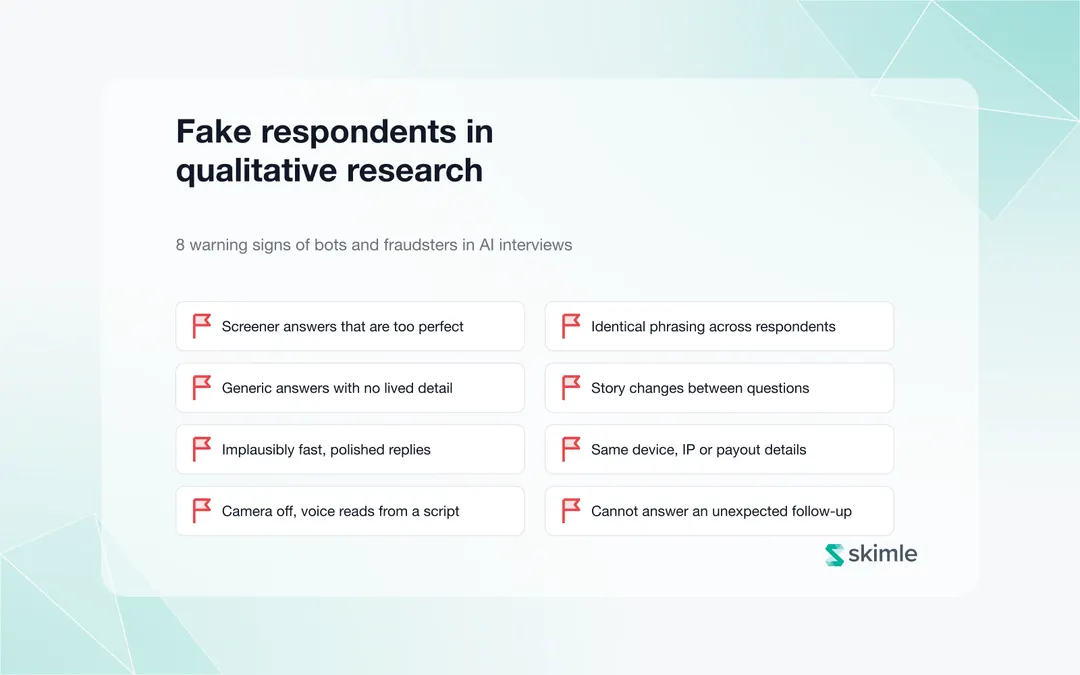
Fake respondents in qualitative research: 8 ways to spot bots and fraudsters in AI interviews
Fake respondents now reach qualitative studies too. 8 warning signs of bots and fraudsters in AI-moderated interviews, and how to screen, detect and clean them.
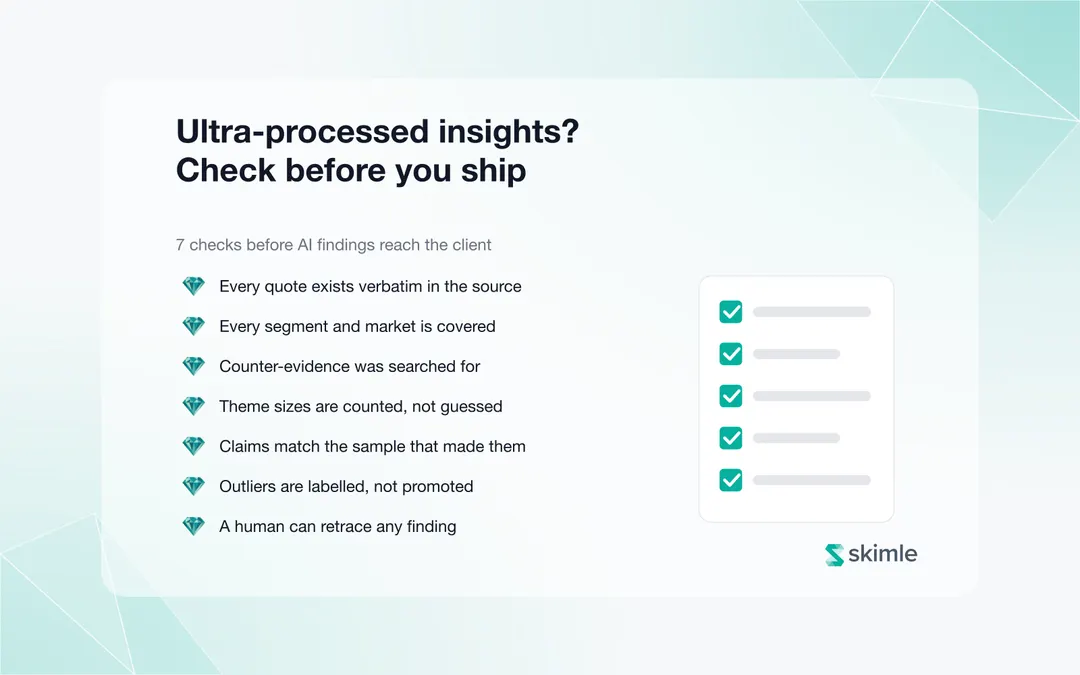
7 checks before AI-generated insights reach the client: quality control for market research
A 7-point quality check for AI-generated research insights: verify quotes, coverage, counter-evidence and claim scope before findings reach the client.
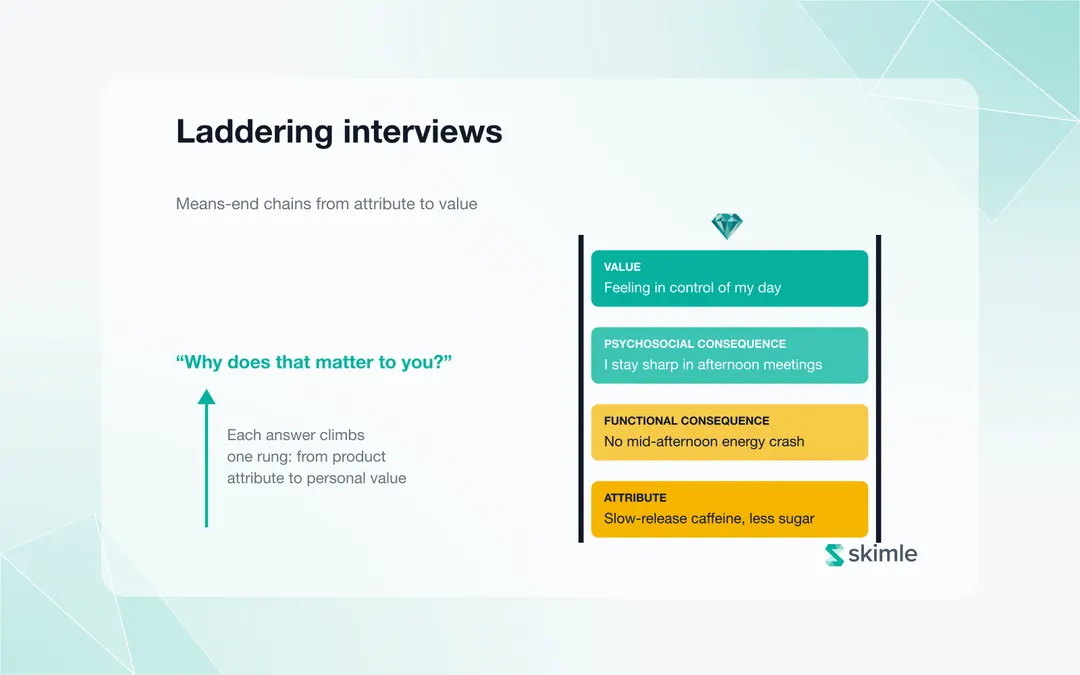
Laddering interviews: a means-end chain analysis guide, from transcript to value map
How to run laddering interviews and analyse them: means-end chain theory, interview probes, coding attributes, consequences and values, and drawing a value map.
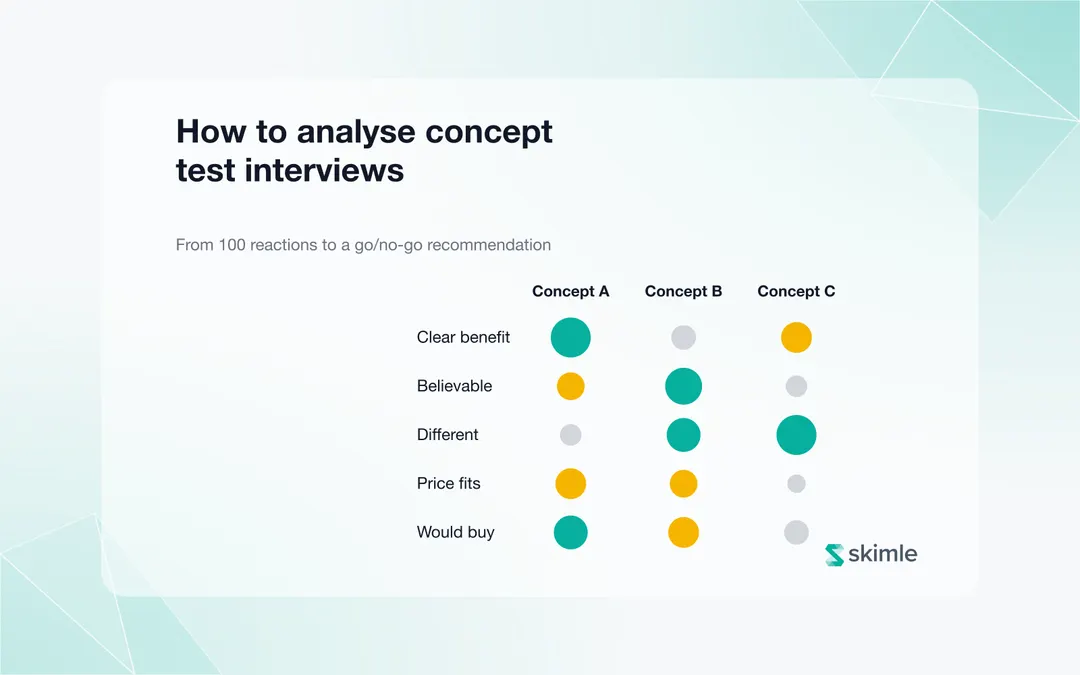
How to analyse concept test interviews: from 100 reactions to a go/no-go recommendation
How to analyse concept test interviews: a 5-step method for coding reactions, comparing concepts and segments, and writing a clear go/no-go recommendation.
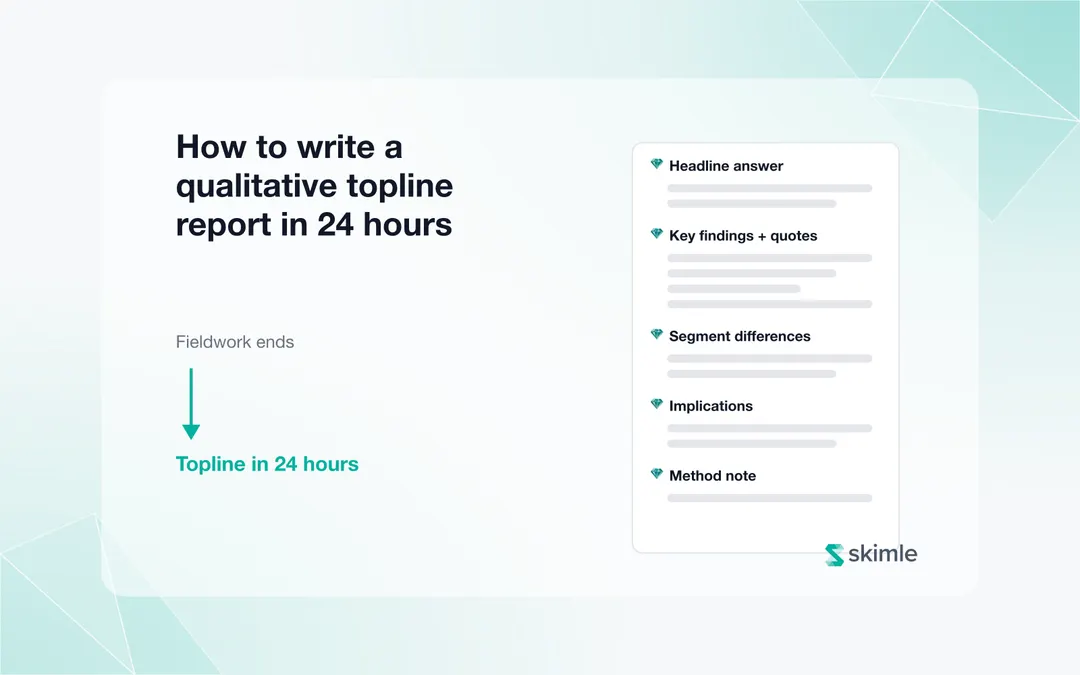
How to write a qualitative topline report in 24 hours (with template)
A qualitative topline report template and 24-hour plan: what to include, how to structure findings and quotes, and how to deliver it the day after fieldwork.
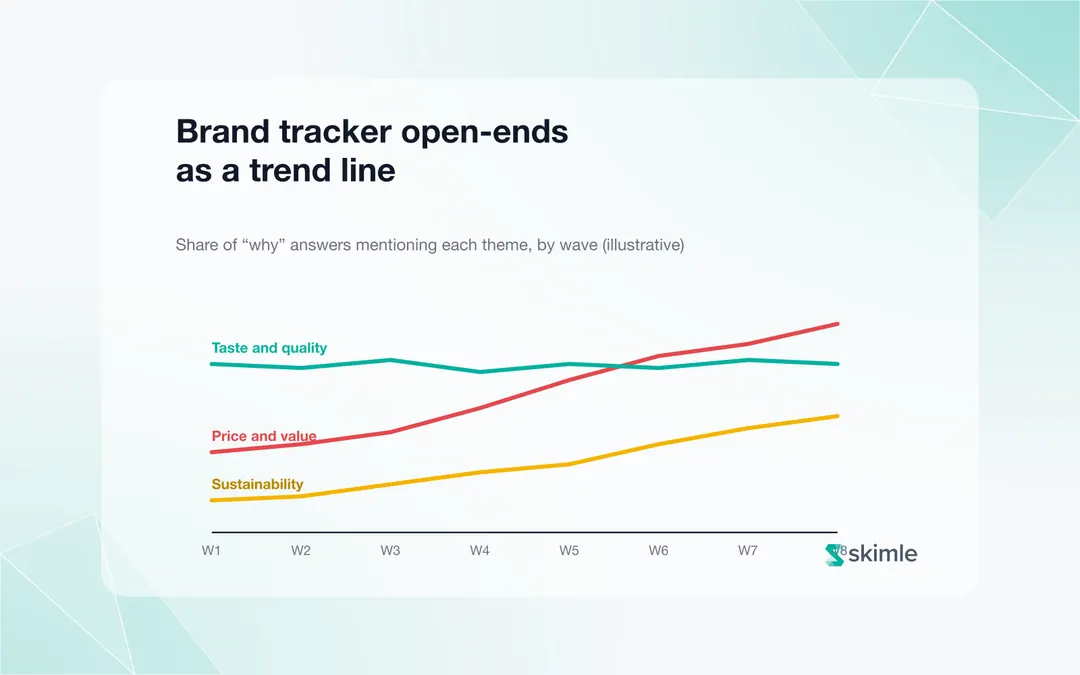
Brand tracker open-ended responses: how to turn thousands of 'why' answers into a trend line
How to analyse brand tracker open-ended responses wave after wave: a stable codebook, consistent coding, theme trends over time and the why behind KPIs.
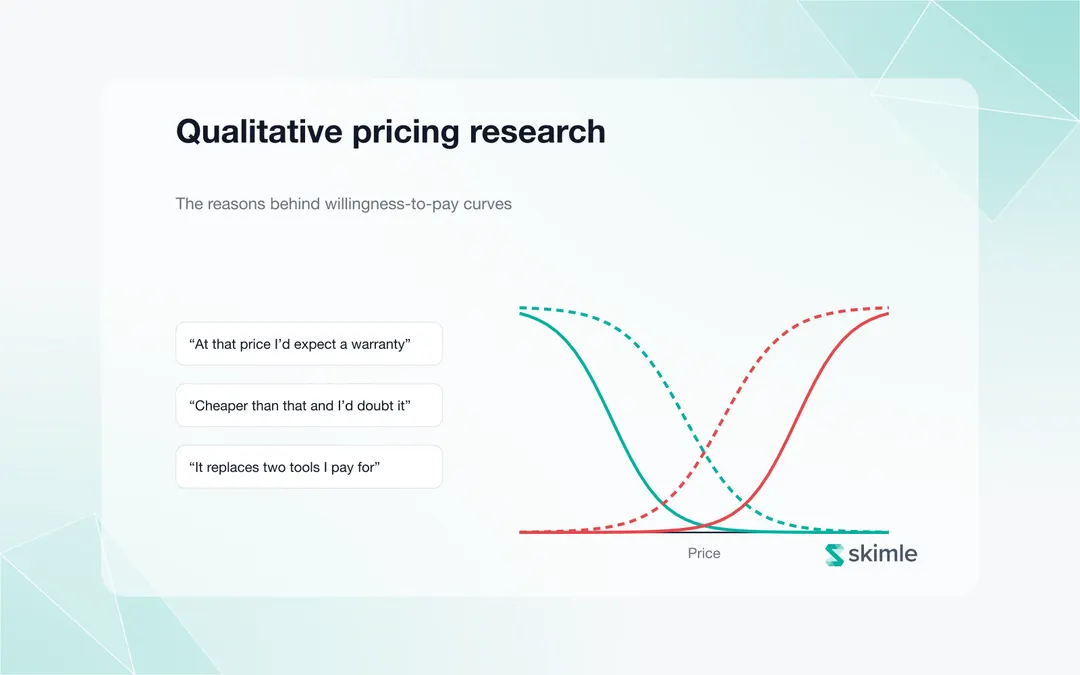
Qualitative pricing research: how to run and analyse willingness-to-pay interviews
How to run and analyse willingness-to-pay interviews: value drivers, reference prices, objections, and how qual explains Van Westendorp and conjoint results.
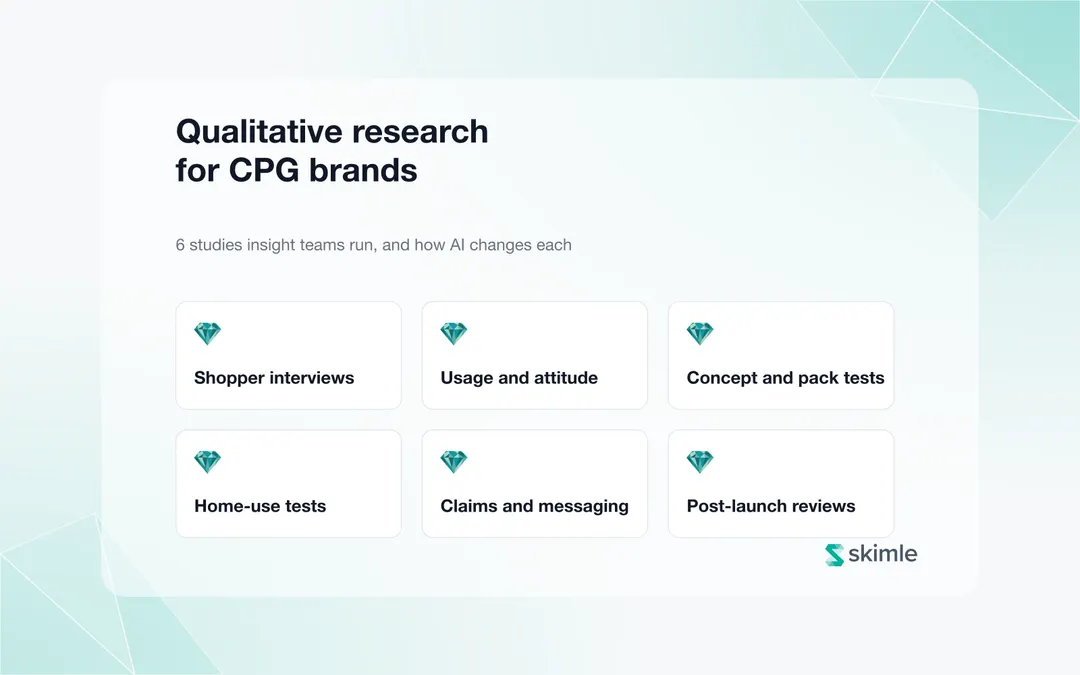
Qualitative research for CPG brands: 6 studies insight teams run and how AI changes each
Qualitative research for CPG and FMCG brands: 6 core studies from shopper interviews to post-launch reviews, and how AI interviewing and analysis change each.

Synthetic respondents in research - promise, pitfalls and when to use in 2026
New 2026 research confirms AI 'digital twins' fail at individual-level prediction and segment targeting. Here's what synthetic respondents can and can't do.

Customer insights research: how to find the real why behind customer behaviour
Customer insights research explains why customers behave, switch or churn. See how it differs from market research and what data and analysis it takes.

Open text analysis: how to find the themes you didn't know to look for
Most open text analysis tools stop at sentiment or category buckets. Here's how inductive theme discovery finds the patterns predefined categories miss.

How to analyse in-depth interviews (IDIs): a complete guide for market researchers
How to analyse in-depth interviews (IDIs): within-case and cross-case coding, sample size, quote selection, and a worked example from a churn study.

Focus group transcription: 5 challenges and how to solve them
Focus group transcription is harder than 1:1 interviews: crosstalk, speaker attribution, accuracy rates. How to transcribe, format and check a group transcript.

The bottom-up rigour problem in commercial research
Most commercial qualitative research is built top-down: skim for themes, find quotes to fit. Academic research does it bottom-up. AI now makes that affordable at deadline.

Why 3x faster is the wrong pitch for AI in research
Selling AI-assisted research on speed alone leads to shorter projects and thinner margins. The better pitch is what teams do with the time AI frees up.

Excel for text: why qualitative analysis needs visible steps, not just an answer
Nobody accepts a black-box result from a spreadsheet. Why do we accept one from AI-assisted qualitative analysis? A case for showing the steps, not just the summary.

A citation is not an analysis - defending your findings with rigour
AI tools can show you the quote behind a finding. They can't show you what they never looked at. Here's why that gap decides whether a client trusts your research.
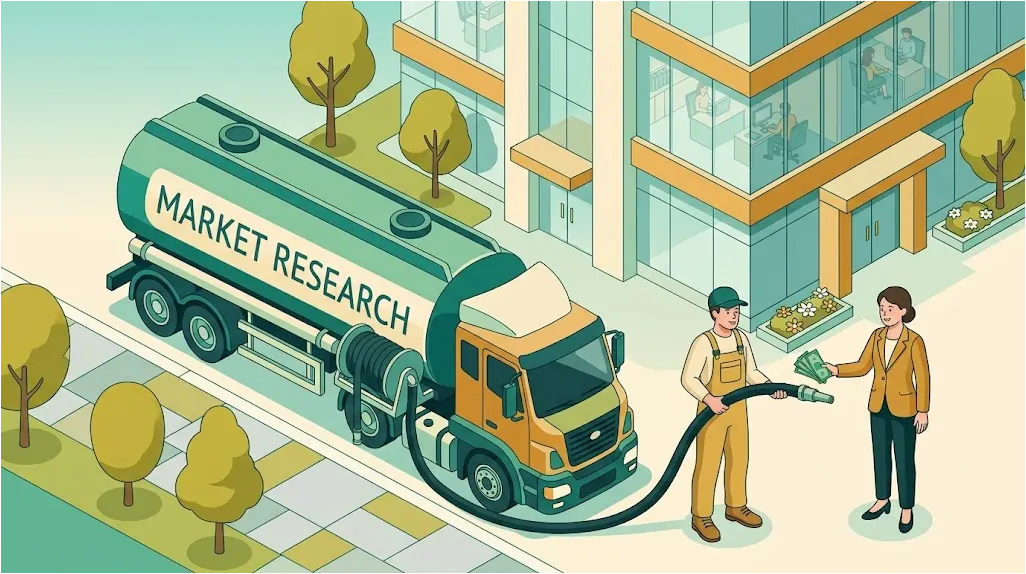
The commoditisation trap: why cheap AI research makes agencies replaceable
Clients expect AI to make research cheaper and faster. Agencies that compete on that basis commoditise themselves. Here's the alternative: compete on depth instead.

The real cost of a fragmented voice of customer programme
Fragmented VoC data produces contradictory findings, slows decisions, and lets the loudest team win instead of the best evidence. Here's how to size the real cost.

How to evaluate qualitative analysis software: a 7-domain RFP checklist for insights teams
A vendor-neutral evaluation framework for qualitative analysis software: 7 scoring domains, the questions to ask, a pilot protocol, and the procurement annex.

Mini-research: 8 ways to turn customer data into a shareable insight in less than a week
Eight small research projects a customer insights team can run in days, using data you already have or can collect quickly, and publish as thought leadership.

How to use AI responsibly in qualitative market research: 7 rules for insights teams
Responsible AI in qualitative market research: 7 rules covering where AI helps, why synthetic respondents fail, and what human-in-the-loop really requires.

What a qualitative study actually costs in 2026: a full cost breakdown
A line-by-line cost model for a qualitative study: recruitment, incentives, moderation, transcription and analysis, with 2026 rates and a worked example.