Signal & Noise blog
Skimle's blog dedicated to high quality analysis using modern methods

Building personas from real research data with AI: a practical guide
How to generate user or customer personas from real interview and survey data with AI, the persona types that exist, and how to avoid baking in bias from skewed input.

Bias in AI-assisted qualitative analysis: what it looks like, and how to catch it
AI bias in qualitative analysis means a model's errors correlate with who said what. What the research on GPT, Llama and Claude found, and how to catch it.

The Critical Incident Technique: a practical guide for UX and market research
The Critical Incident Technique (CIT) asks for specific remembered events, not general opinions. What it is, how to run it, and how to analyse incidents at scale.

Patient experience qualitative analysis with AI: a guide for healthcare providers and health plans
How to analyse patient and member free-text feedback at scale with AI, while handling health data anonymisation and care-touchpoint mapping properly.

Skimle Ask: the simple way to do "qual at scale"
Skimle Ask is a simple AI interviewer for quick polls, like Doodle for opinions or Google Forms for data. Qual at scale: how to launch one and analyse results.
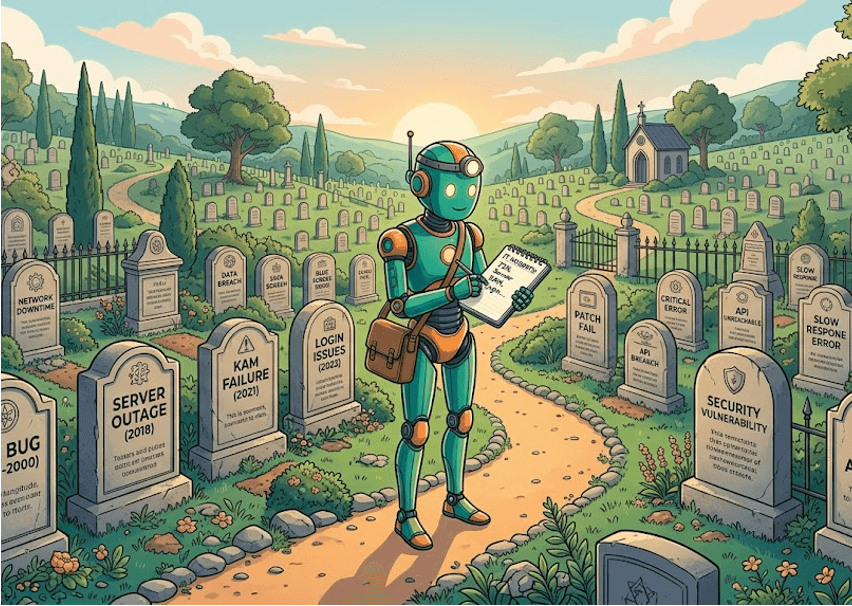
Incident postmortem analysis with AI: finding themes across a year of retrospectives
How engineering leaders use AI to find recurring root-cause themes across dozens of incident postmortems, with traceability back to source.

Earnings call transcript analysis with AI: a guide for IR teams and analysts
How IR teams and analysts use AI for earnings call transcript analysis: management language, analyst Q&A themes, quarter-over-quarter shifts.

Qualitative MEL data analysis: a guide for NGO and international development teams
How Monitoring, Evaluation, and Learning (MEL) teams can analyse beneficiary interviews, FGDs, and MSC stories at scale, with donor traceability and native multi-language support.

Qualitative evidence synthesis: a practical guide to thematic synthesis and meta-ethnography
Qualitative evidence synthesis combines findings across published studies. This guide covers meta-ethnography, thematic synthesis, and CASP appraisal.

FOIA document analysis with AI: finding the story in 10,000 pages of leaked or released records
How to analyse large FOIA releases and leaked documents with AI: find recurring themes and contradictions, and trace every claim to its source page.

Customer advisory board feedback synthesis: turning CAB notes into themes
How to synthesise customer advisory board feedback into recurring themes with full traceability, instead of relying on a manual spreadsheet nobody keeps updated.

Skip-level interview analysis: finding the themes in 40 sets of notes
How to analyse skip-level meeting notes at scale and tell a systemic problem from one person's complaint, with full traceability back to source.

AI for public comment analysis: a guide for government and policy teams
AI for public comment analysis helps agencies in the US, EU, and elsewhere triage and code thousands of regulatory submissions with full traceability.

How to do descriptive coding in qualitative research: a step-by-step guide
Descriptive coding assigns summary labels to qualitative data passages using a fixed codebook. Here is how to build one, apply it consistently, and use AI to scale the process.

Interview guide: what it is, how to write one, and a ready template
An interview guide is a structured set of questions and topic areas used to run qualitative interviews consistently. Here is how to write one, what to include, and a template you can use.

How to do customer discovery: a practical guide to interviewing before you build
Customer discovery interviews reveal whether the problem you're solving is real and who it matters to most. Learn how to find participants, run interviews, and turn findings into confident product dec...

How to analyse stakeholder consultation responses: a guide for policy teams
Analysing hundreds of written consultation responses requires systematic coding, metadata by respondent type, and clear audit trails. This guide covers the full workflow for public and regulatory cons...

How to run primary research in a consulting project: from scoping to synthesis
A practical guide to consulting primary research: scoping the right questions, designing the interview guide, managing fieldwork, and synthesising 20+ interviews into a clear recommendation.

How to do thematic analysis in Excel: a step-by-step guide (and when to upgrade)
Step-by-step guide to doing thematic analysis in Excel — spreadsheet setup, colour coding, and pivot tables for qualitative data. Plus when Excel stops working and what to use instead.

How to write a thematic analysis results section: structure, examples, and common mistakes
A thematic analysis results section presents each theme as a heading, supported by 2-4 verbatim quotes with analytical commentary. This guide shows the structure, worked examples, and what reviewers l...

Jobs-to-be-done interviews: how to run them and analyse what you find
JTBD research reveals why customers hire or fire products by exploring the progress they're trying to make. Learn the Switch interview structure, how to code JTBD data, and how to act on the findings.

Voice of customer research: how to build a VoC programme that actually influences decisions
Voice of customer research captures customers' expectations and experiences to drive product, marketing, and retention decisions. Learn how to design, collect, and analyse VoC data at scale.

Content analysis vs thematic analysis: which method fits your research?
Content analysis counts and categorises text systematically; thematic analysis interprets patterns of meaning. Learn the 5 key differences and when to choose each method.

Interpretive phenomenological analysis (IPA): a guide for psychology and health researchers
IPA explores lived experience through small, purposive samples and deep individual case analysis. Learn when to use IPA, how the 6-step process works, and how it differs from thematic analysis.