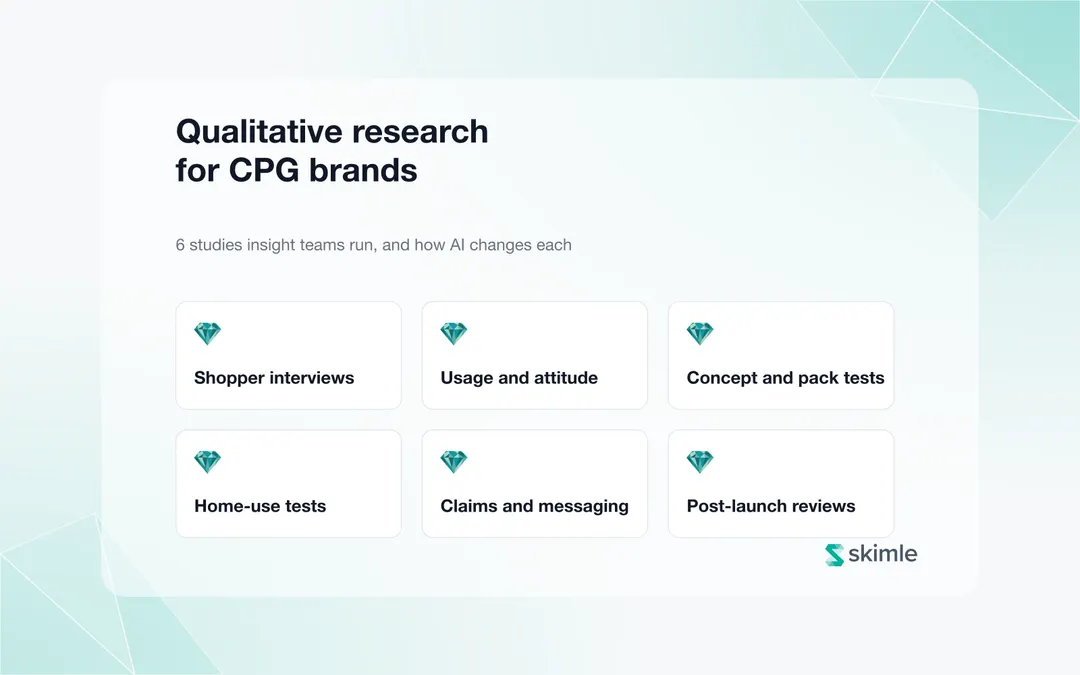
Consumer packaged goods (CPG) insight teams run six qualitative studies again and again: shopper interviews, usage and attitude research, concept and pack tests, home-use tests, claims and messaging tests, and post-launch reviews. AI changes each one in the same two ways: interviews can run with hundreds of consumers in days rather than weeks, and every transcript can be analysed systematically rather than skimmed.
CPG has always been one of the heaviest users of qualitative research, for a simple reason: most new products fail. Nielsen has long reported that more than 85% of new CPG products fail in the marketplace. Qualitative research is how brands try to understand shoppers well enough to beat those odds, and it is also where timelines and budgets have been hardest to compress.
Why do CPG brands rely on qualitative research?
Purchase decisions in CPG are fast, habitual and often hard for consumers to explain. Sales data shows what people buy. Surveys show what they say they prefer. Qualitative research shows how the category fits into their lives, what they notice on the shelf and what words they use, which is what product, pack and communication decisions need.
The challenge has been scale and speed. Category teams work on launch calendars, retailer deadlines and seasonal windows. A qualitative study that takes six weeks from brief to debrief often arrives after the decision. That is what AI interviewing and analysis change most.
What are the 6 qualitative studies CPG insight teams run?
1. Shopper interviews
What it is: In-depth interviews or accompanied shops exploring how people choose within a category: the trigger, the shelf, the trade-offs, the role of promotions and private label.
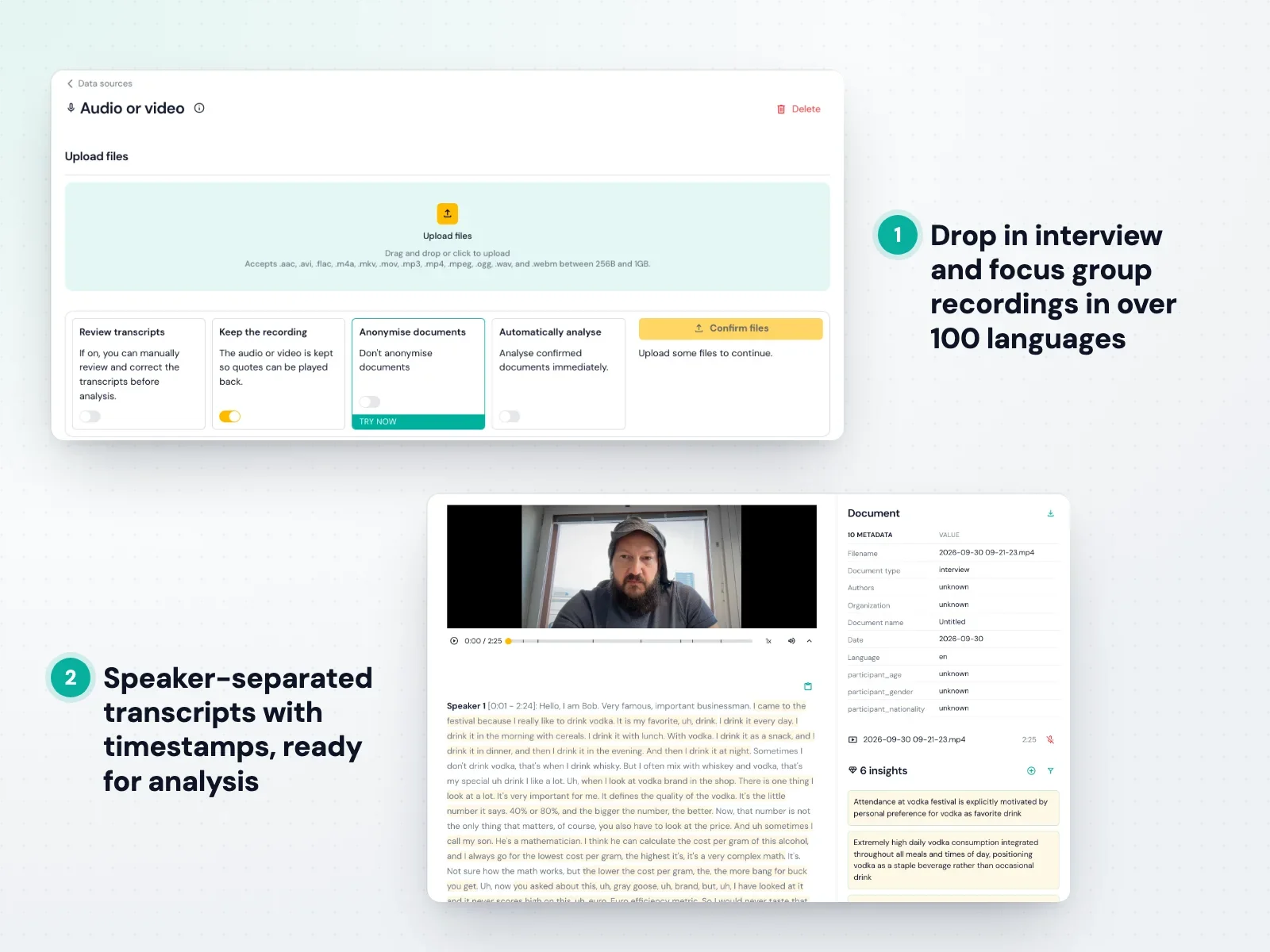
How AI changes it: AI-moderated interviews can reach shoppers right after a purchase, while the memory is fresh, and in many markets at once. Video or voice answers keep the texture of the experience. Transcription and analysis in over 100 languages means a multi-country study no longer needs a translation stage before analysis, as the screenshot below shows.
2. Usage and attitude (U&A) research
What it is: A broad study of how, when and why a category is used, and what people think of the brands in it. Traditionally a large survey with a qualitative phase to shape it and explain it.
How AI changes it: The qualitative phase can now be big enough to quantify. Running 150 AI-moderated interviews alongside or instead of the exploratory focus groups gives both the language and an indication of how common each usage occasion is. Our guide to sizing AI-moderated interview studies covers when that scale is worth it.
3. Concept and pack tests
What it is: Showing consumers early product ideas, pack designs or claims, and collecting their reactions before investment.
How AI changes it: Concepts can be shown in rotated order to every respondent with the same follow-up questions, and the analysis can count reactions per concept and segment while keeping the reasons. We describe the full method in how to analyse concept test interviews.
4. Home-use tests
What it is: Consumers use a product at home for days or weeks and report back, often in a diary format.
How AI changes it: Short AI check-ins at set points (first use, day three, end of test) replace long paper or app diaries, and follow-up questions can probe a problem when it is reported rather than weeks later. Each check-in becomes a document with the test day attached as metadata, so experiences can be compared over the course of the test.
5. Claims and messaging tests
What it is: Testing which product claims, benefit statements or campaign lines are understood, believed and motivating.
How AI changes it: More claims can be tested with more people, and the analysis can separate "I don't understand it" from "I don't believe it", which call for different fixes. The laddering technique helps here too, by linking claims to the personal values they connect with.
6. Post-launch reviews
What it is: Understanding why a launch is performing above or below plan: trial without repeat, repeat without trial, or confusion at the shelf.
How AI changes it: Ratings and reviews, customer service contacts and quick AI interviews with triers and rejecters can be analysed together. Our guide to combining customer insights across feedback channels covers how to bring those sources into one analysis.
If you run consumer or shopper research, see how this fits the market research and customer insights workflow.
What changes for CPG insight teams overall?
Across the six studies, three shifts stand out.
Qual becomes continuous. When a study costs a fraction of what it did and takes days, teams run smaller studies more often, in step with the launch calendar. That matches the always-on research model many consumer brands are moving towards.
The analysis becomes the bottleneck. Collecting 300 interviews now takes days, but reading them properly still takes weeks without help. Insight teams need tools that code every transcript, keep each quote linked to its respondent and compare segments, or the extra data turns into extra noise.
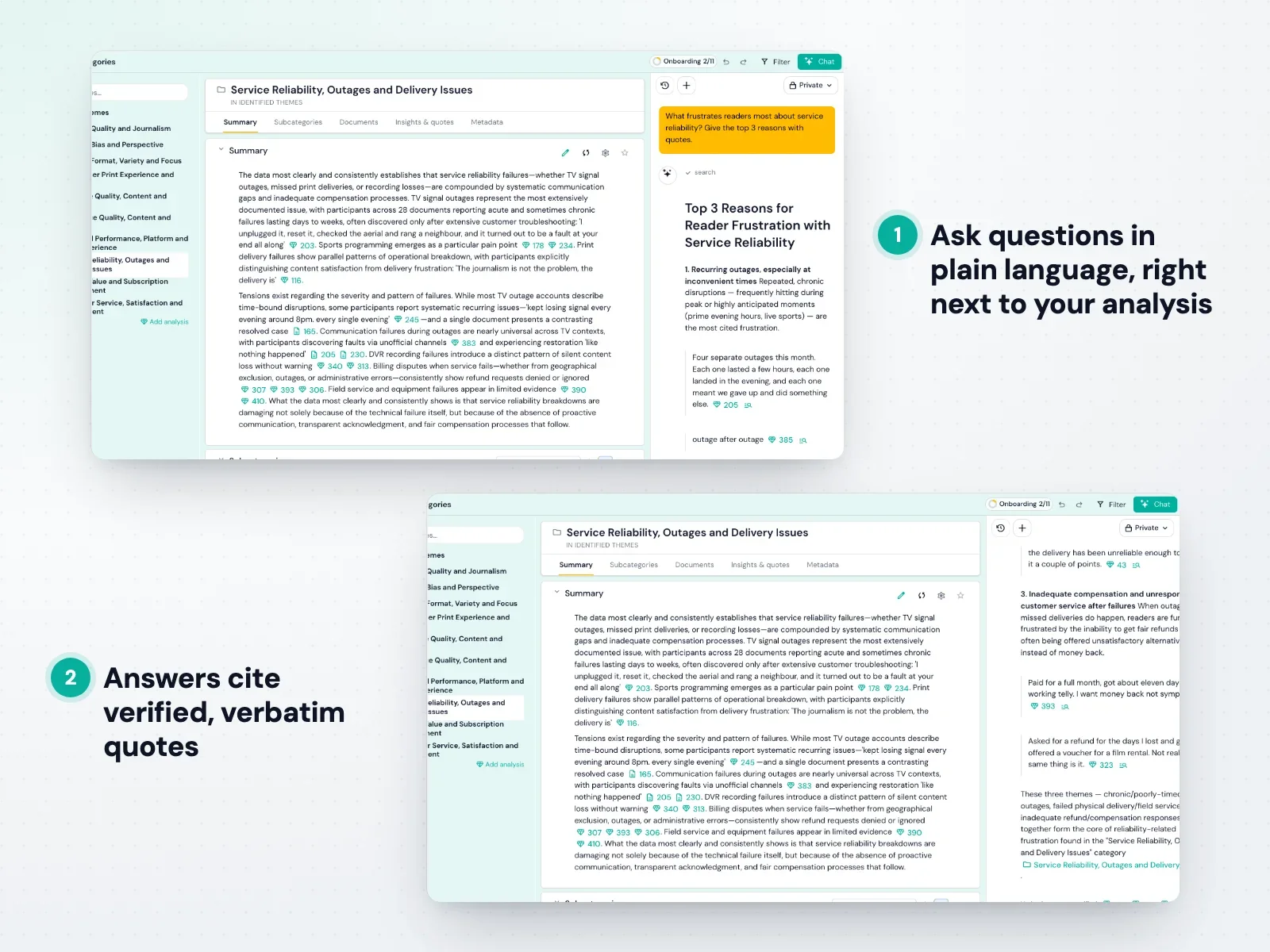
Questions can be asked of the whole archive. Once past studies are coded consistently, a brand manager can ask what consumers have said about sugar reduction across the last ten studies. An agentic chat that reads the coded analysis and cites the quotes behind every answer, as below, makes this practical.
What should CPG teams watch out for?
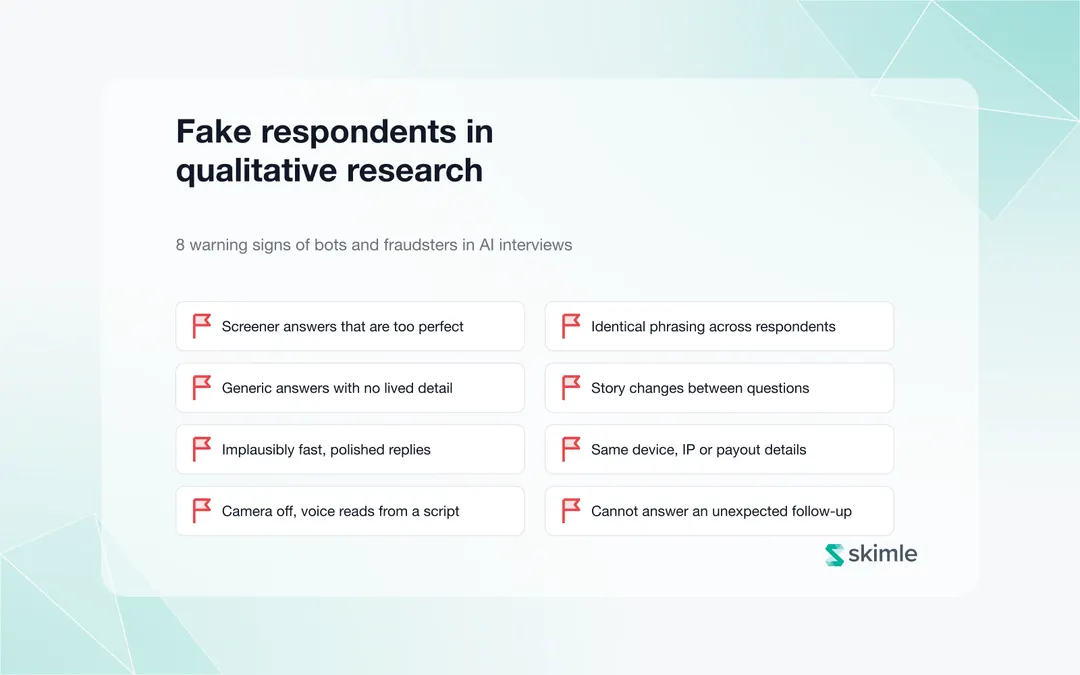
- Recruitment quality. Cheap, fast online recruitment attracts fraudulent respondents. Build checks into every study; our guide to spotting fake respondents lists the warning signs.
- Synthetic shortcuts. Synthetic consumers can help with early hypotheses but are not a substitute for real shoppers on decisions that matter. See our view on synthetic respondents.
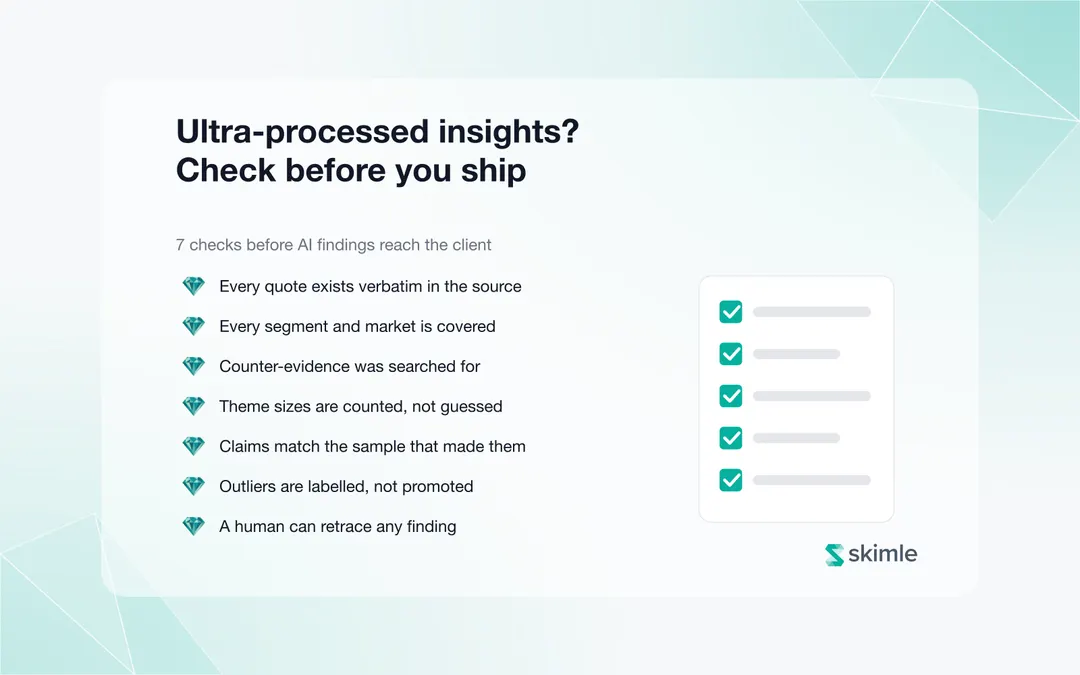
- Quality of AI outputs. A polished summary is not evidence. Check every quote and every claim before it reaches a brand team, using a quality check for AI-generated insights.
- Data protection. Consumer interviews contain personal data. Choose tools that store data in your region, do not train AI models on it and can anonymise transcripts before analysis.
Summary: 6 CPG studies and what AI changes
| Study | Classic format | What AI changes |
|---|---|---|
| Shopper interviews | 15 to 30 IDIs, accompanied shops | In-the-moment interviews across markets |
| Usage and attitude | Focus groups plus large survey | Qual phase large enough to quantify |
| Concept and pack tests | Groups or IDIs with 20 to 40 people | Rotated, consistent probing at scale |
| Home-use tests | Diaries over 2 to 4 weeks | Short AI check-ins with follow-ups |
| Claims and messaging | Groups, then a quant test | More claims, understanding and belief separated |
| Post-launch reviews | Ad hoc interviews | Reviews, contacts and interviews analysed together |
Frequently asked questions
What is qualitative research in CPG?
Qualitative research in CPG uses interviews, focus groups, diaries and observation to understand how consumers choose, use and talk about everyday products. It explains the reasons behind sales and survey data and shapes product, pack and communication decisions.
Can AI interviews replace focus groups for CPG brands?
For many studies, AI interviews can replace or supplement focus groups, especially where individual reactions matter more than group discussion. Focus groups remain useful for exploring shared language and social dynamics around a category. See focus groups versus individual interviews for the trade-offs.
How many consumers should a CPG qualitative study include?
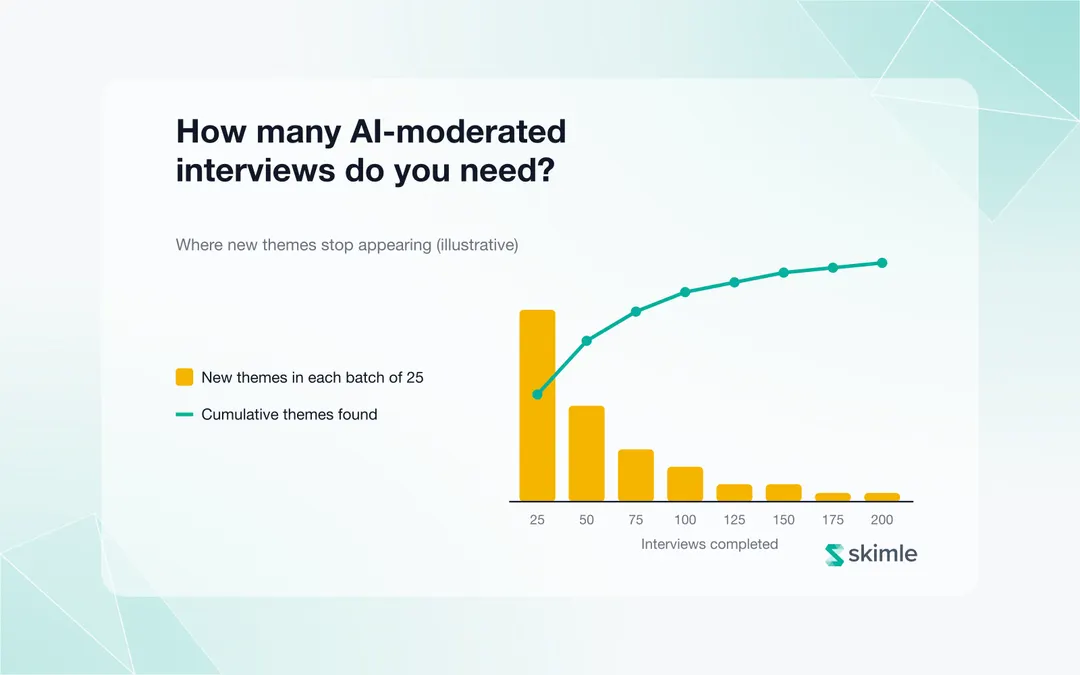
Traditionally 20 to 40 per study. With AI interviewing, 50 to 200 is affordable and lets you compare segments and count reactions. Size the study to the comparisons you need to report.
How do I analyse consumer interviews from several countries?
Analyse them in their original languages with a tool that supports multilingual analysis, rather than translating everything first. Our guide to analysing interviews in multiple languages explains how.
Running consumer research for a CPG brand? Try Skimle for free: collect consumer interviews with Skimle Ask, analyse them in any language and export findings with quotes straight to PowerPoint.
Related reading:
- Qualitative consumer insights research guide
- Qualitative market research
- How to write a qualitative topline report in 24 hours
About the author
Olli Salo is a former Partner at McKinsey & Company where he spent 18 years helping clients understand the markets and themselves, develop winning strategies and improve their operating models. He has done over 1000 client interviews and published over 10 articles on McKinsey.com and beyond. LinkedIn profile