What is Skimle?
An overview of Skimle and its approach to qualitative data analysis.
Skimle is an AI-powered qualitative data analysis platform that turns interviews, reports, and other text documents into structured, traceable insights. It combines the rigour of academic thematic analysis with the speed of AI.
How it works
Unlike most consumer AI products, we do not only analyze data when you prompt us to. Skimle instead creates a sophisticated data structure from your data, identifying themes that cut across your documents. This enables us to provide a sophisticated user interface through which you can explore your data and organize it to match your vision.
We have a few core concepts that we use to structure your data:
- Documents: Typically interviews, reports, or respondents. They correspond to PDFs and other documents you upload, rows in CSV files, or responses from Skimle Ask.
- Analyses: These are AI-generated "perspectives" on your data, extracting content of interest from your documents.
- Insights: Insights are the result of analysis -- document-specific observations that contain all relevant direct quotes from the specific document.
- Categories: These are the themes and sub-themes that cut across your documents. Insights are assigned to the most relevant category by our AI, but you manually link an insight to any number of relevant categories.
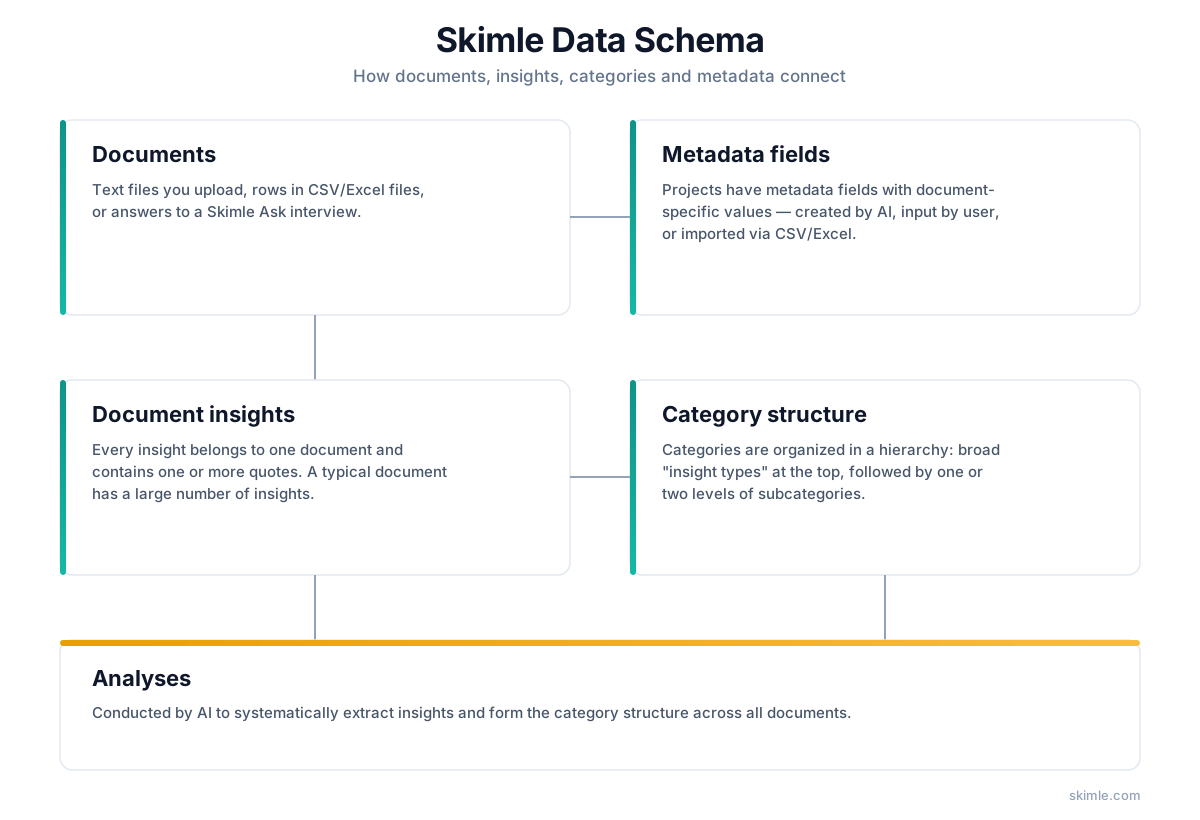
We use these concepts to create a hierarchical structure of your data. This structure is then used to provide a sophisticated user interface through which you can explore your data and organize it to match your vision.
Simple workflow
1. Add data & Analyze
Add your material as data sources — documents (PDF, Word), audio or video, spreadsheets, or Skimle Ask surveys. Skimle transcribes, extracts text, and systematically analyzes every passage using hundreds of atomic language model calls to code insights into categories.
2. Explore & Refine
Browse results in a tree-structured categories view or a spreadsheet-like table with documents as rows and themes as columns. Click any cell to see verbatim quotes linked to their source. Filter by metadata, navigate hierarchical categories, and ask questions via the AI chat.
3. Export
Export to Word (with executive summaries and quotes), PowerPoint (with evidence-based slides), or Excel for further analysis and sharing.
What makes Skimle different
Traditional CAQDAS packages — computer-assisted qualitative data analysis software such as NVivo, ATLAS.ti, and MAXQDA — are rigorous but slow: manually coding 40 interviews can take weeks, and recoding data when your analysis changes is painful. General-purpose AI chatbots are fast but unreliable, offering surface-level summaries without traceability.
Skimle sits in between: it systematically processes every document to create a transparent, editable knowledge structure where every insight links back to a verbatim quote in the source material.
Importantly, Skimle is designed for teamwork: you and your colleagues can tag and comment insights in the shared project workspace.
What Skimle is not
- It does not replace human interpretation — it is a power tool for experts
- It is not a survey collection tool (see Skimle Ask for AI-powered interviews)
- It does not automatically generate finished research papers
- It does not handle purely quantitative data
Try Skimle on your own data
Skimle is a qualitative analysis tool built for researchers who need results they can trust. Book a demo to see it applied to your own interviews and documents, or start a free trial — see pricing for plans and how credits work.